A Free Online Seminar from Living Earth College
Across many regions of the world people sense that something in our food systems is not working as it should.
Farmers are working harder for smaller margins. Communities often feel disconnected from the land that feeds them. Infrastructure designed for large-scale systems can make it difficult for smaller producers to reach local markets. At the same time many people are searching for practical ways to strengthen food security, regional economies and community wellbeing.
Yet within these challenges there are also opportunities.
When we begin to look closely at food systems we see that they are not simply supply chains. They are living systems shaped by relationships between soil, farms, infrastructure, community economies and policy.
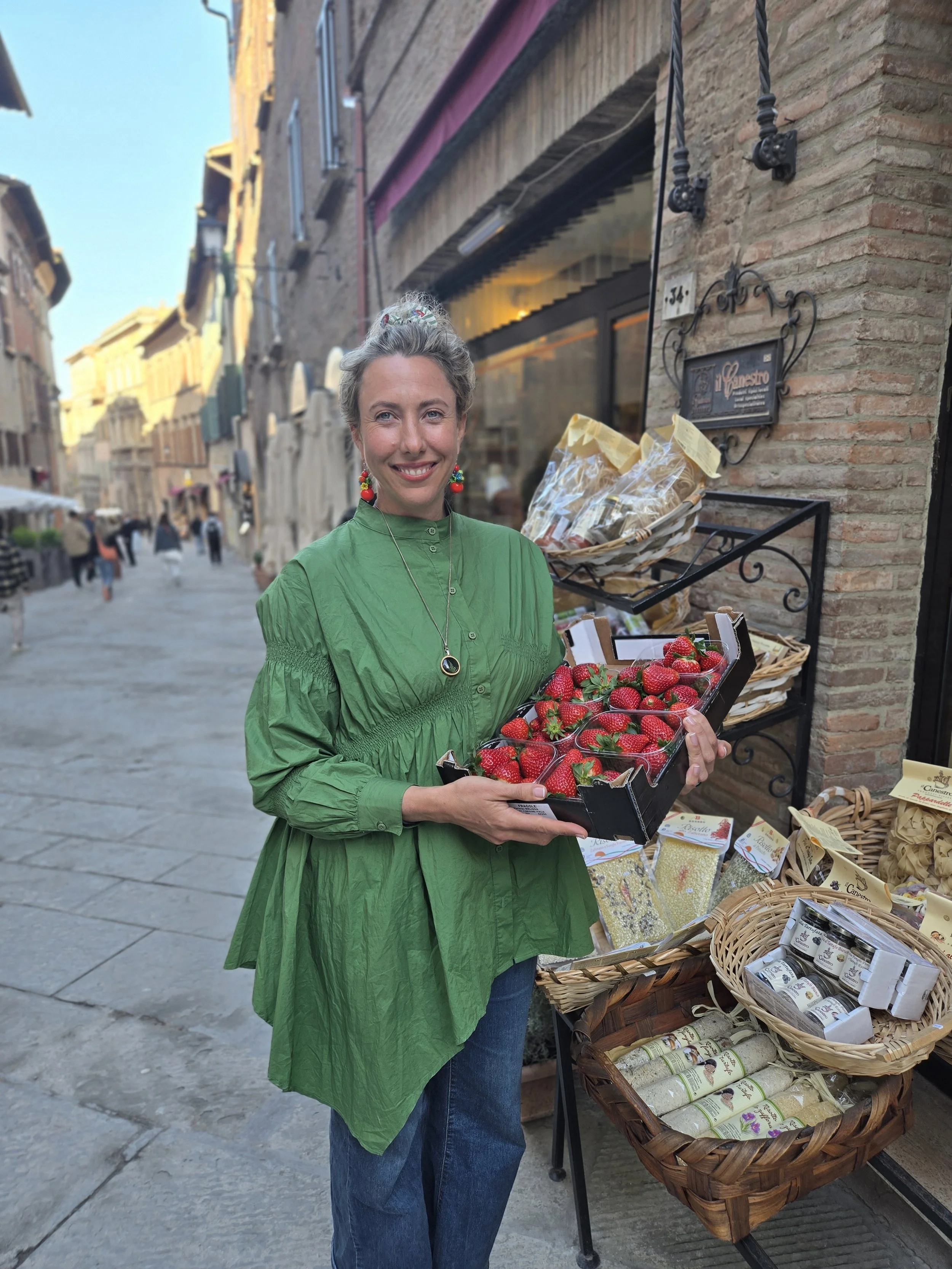
A personal invitation
Over many years I have worked with farmers, communities, and local governments exploring how stronger local food systems might emerge. Through initiatives such as the Docklands Food Garden, the Huon Valley Food Hub, the Peach & Pear Food Box, and the Shepparton Food Hub, I saw both the potential of community food initiatives and the structural barriers that often prevent them from flourishing.
My doctoral research reflected on these experiences and asked a simple question:
What conditions allow local food systems to truly thrive?
Living Earth College was created to share these insights and support people working to strengthen food systems in their own regions. If you feel called to participate in this work, I warmly invite you to join the first cohort.
Dr Emily Samuels-Ballantyne
Founder, Living Earth College
Strengthening food systems therefore requires more than a single solution. It requires the ability to understand how these elements interact within a particular place.
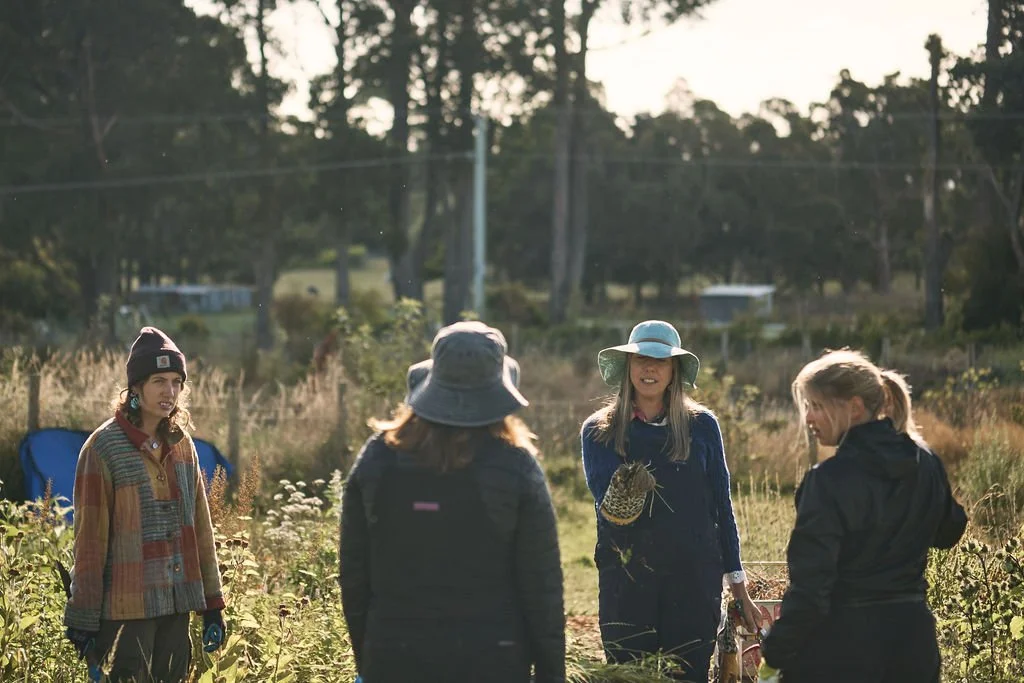
Over the past decade this work has been explored through the Con Viv approach, a living systems design process developed through practical work across farms, community food initiatives and regional policy.
The approach begins with careful observation of land, soil and local conditions. From there it explores how food systems can be strengthened through community enterprise, regional infrastructure and supportive policy frameworks.
This work has led to the development of Living Earth College, an educational initiative exploring practical pathways for activating local food systems.
To introduce this work, Living Earth College is hosting a free online seminar exploring how communities can begin strengthening food systems within their own regions.
Free Seminar
Activating Local Food Systems
In this session we will explore:
• why many food systems struggle to support both farmers and communities
• how local food networks can strengthen regional economies
• the role of infrastructure such as food hubs and distribution systems
• how community initiatives and policy can work together
• practical examples of food system activation
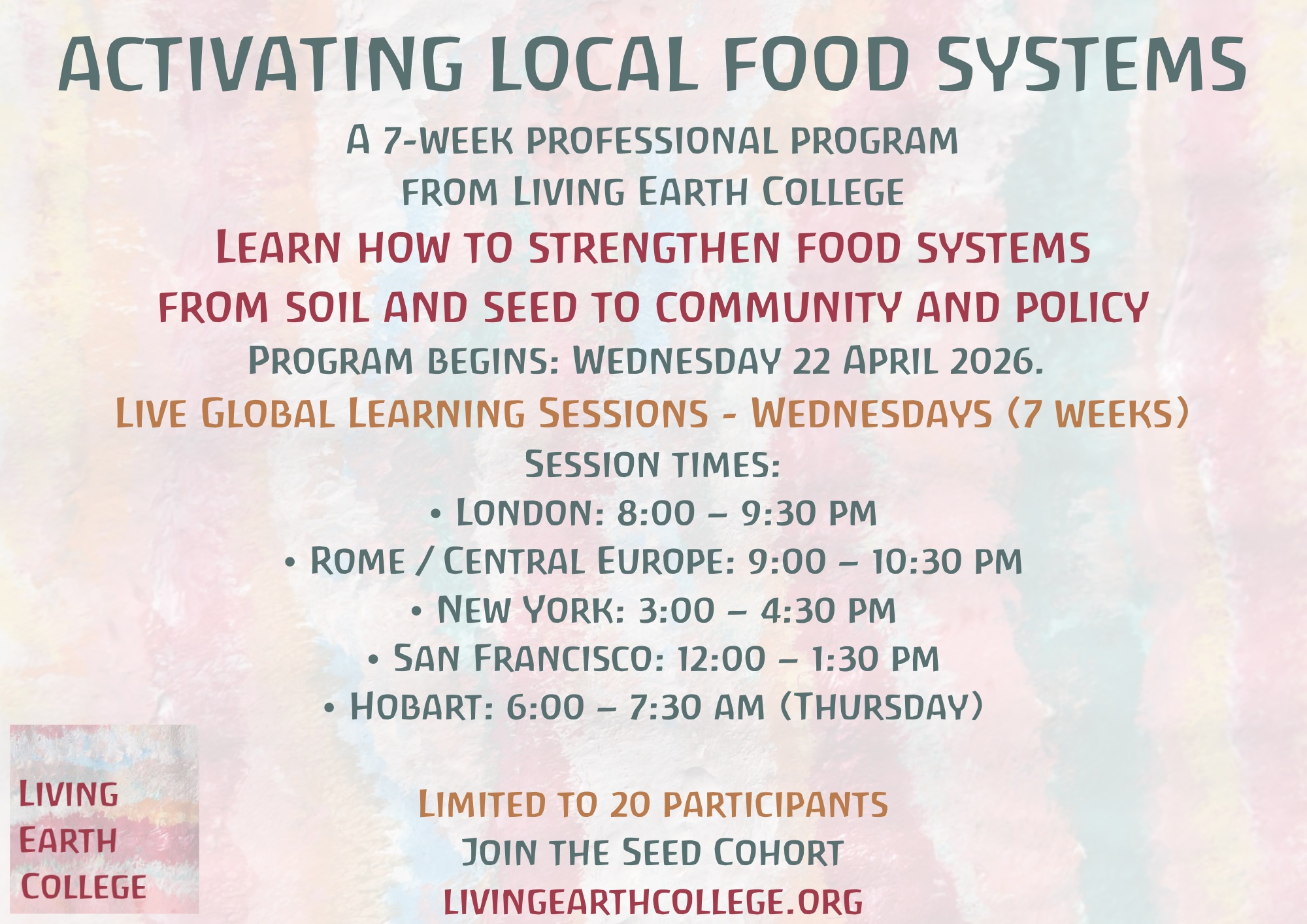
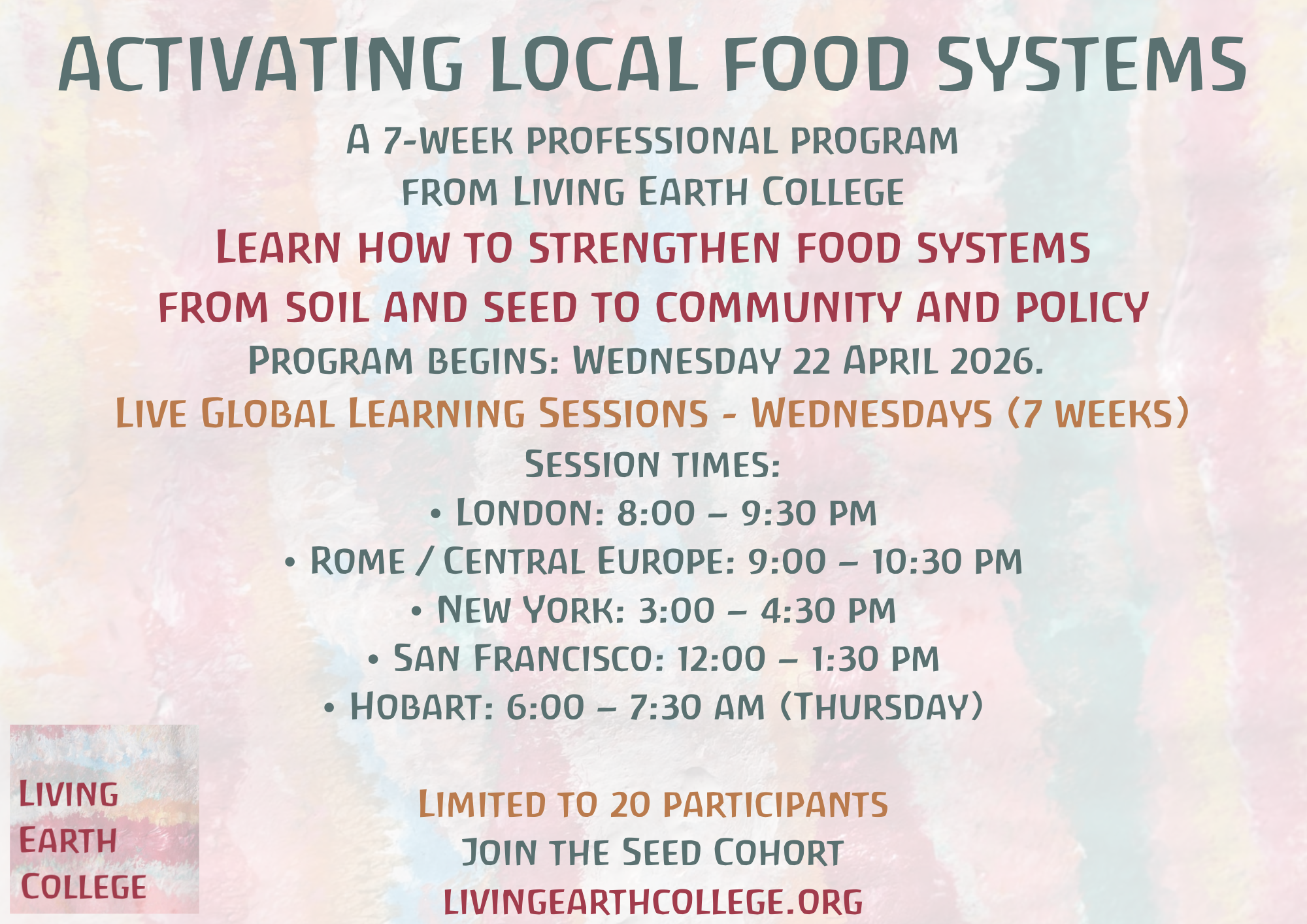
The seminar will also introduce the Activating Local Food Systems program from Living Earth College, a seven-week international course exploring these themes in greater depth.
Who This Seminar Is For
This conversation may be valuable for:
• farmers and land stewards
• community food organisers
• designers and planners
• educators and students
• policy practitioners
• anyone interested in strengthening food systems where they live
Join the Conversation
Strengthening food systems is not only about agriculture. It is about how land, community, economy and governance can work together to support thriving regional life.
If you are interested in exploring how this work might apply in your own region, you are warmly invited to join the seminar.