For 10 years I ran a small community food system experiment called Peach n Pear, connecting households directly with local farmers through a neighbourhood food box.
Every fortnight around 30 food boxes were distributed through a simple community network. What began as a modest initiative slowly revealed something deeper about how living local food systems actually function.
Participants began forming real relationships with farmers and with each other. Food was no longer an anonymous commodity but something connected to land, seasons, and the people who grow it. Many households eventually stopped purchasing fresh food from supermarkets entirely because the food was more nutritionally dense and because the relationships surrounding it created a sense of belonging and care.
Over time Peach n Pear also inspired spin off food communities in Melbourne and regional Victoria, demonstrating how easily this model can replicate when communities organise around food again. The most fascinating insight however is the systemic economic potential.
If a model like this were scaled across Australia
- 50,000 food communities
- serving 25 households each
- with a $55 weekly food box
- operating 45 weeks each year
this simple multiplication produces a remarkable result. $3.09 BILLION each year flowing directly into local farm and food economies....Not through complicated infrastructure but through communities and farmers working together.
A useful Australian case study that shows the policy potential of this thinking is the Huon Valley Food Hub in Tasmania, where collaboration between farmers, local government, and community initiatives created a regional food distribution system that strengthened farmer livelihoods while reconnecting communities with local produce. The project demonstrated how relatively small investments in coordination, logistics, and community engagement can unlock significant value in regional food economies.
Peach n Pear was a small living experiment, yet within it lies a glimpse of a different kind of food system where communities, farmers, and land are woven together through relationships and shared stewardship of food.
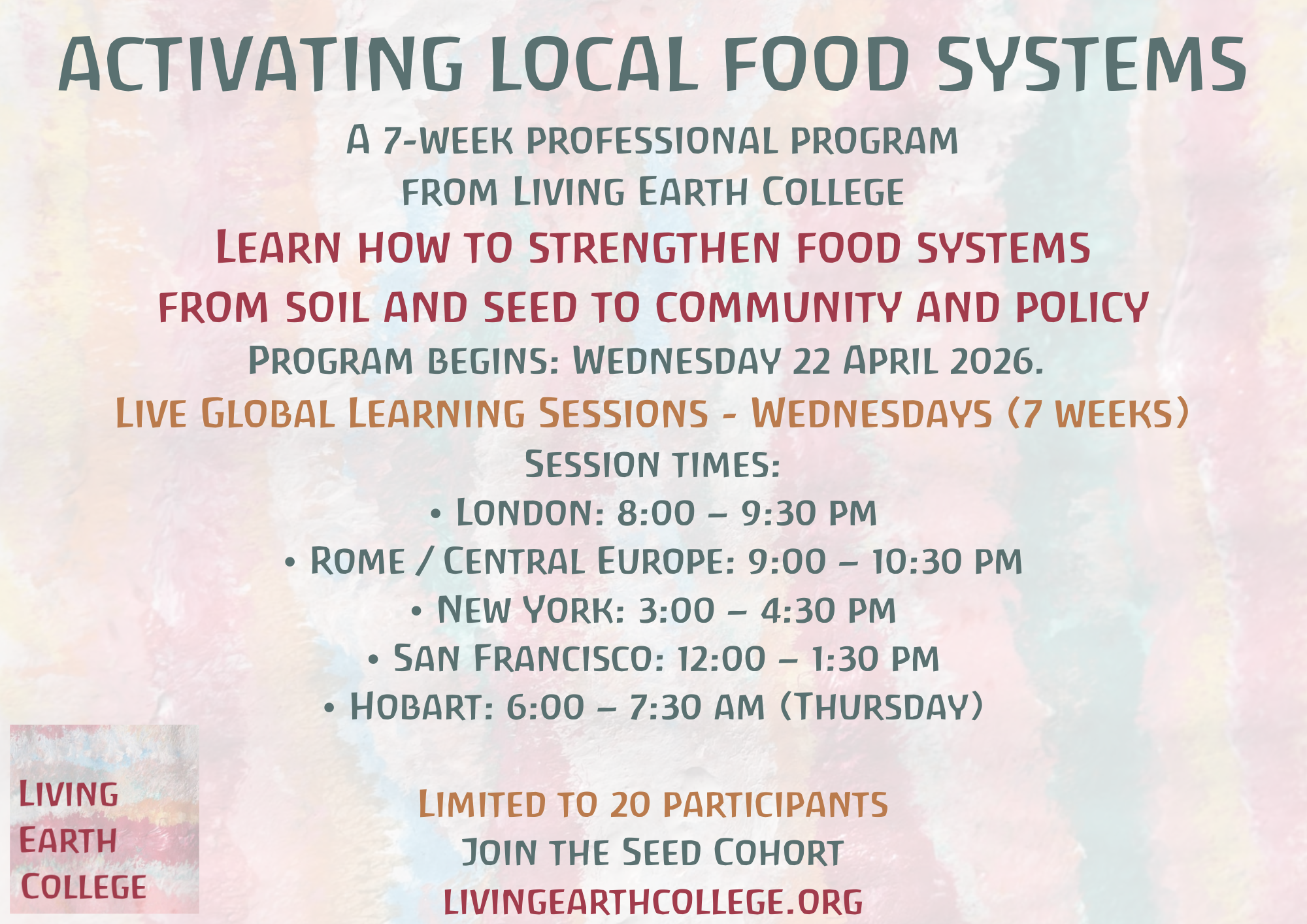
These lessons now inform my work through Living Earth College and the course Activating Local Food Systems, where designers, policy makers, farmers, and community organisers explore how to cultivate practical food economies that nourish both land and society.
Food systems change is not only about policy. It is about communities remembering how to organise around food again.
Check out www.livingearthcollege.org to join our Activating Local Food Systems Course
Contact Dr Emily Samuels-Ballantyne at Con Viv Design Studio if you would like to collaborate on policy work www.convivdesign.org
#localfoodsystems
#sustainablefoodsystems
#regenerativeagriculture
#farminglivelihoods
#communityfood
#foundationaleconomics
#foodpolicy
#livingearthcollege