How Can Communities Activate Billions of Dollars in the Local Food Economy?

For 10 years I ran a small community food system experiment called Peach n Pear, connecting households directly with local farmers through a neighbourhood food box.

Every fortnight around 30 food boxes were distributed through a simple community network. What began as a modest initiative slowly revealed something deeper about how living local food systems actually function.

Participants began forming real relationships with farmers and with each other. Food was no longer an anonymous commodity but something connected to land, seasons, and the people who grow it. Many households eventually stopped purchasing fresh food from supermarkets entirely because the food was more nutritionally dense and because the relationships surrounding it created a sense of belonging and care.

Over time Peach n Pear also inspired spin off food communities in Melbourne and regional Victoria, demonstrating how easily this model can replicate when communities organise around food again.

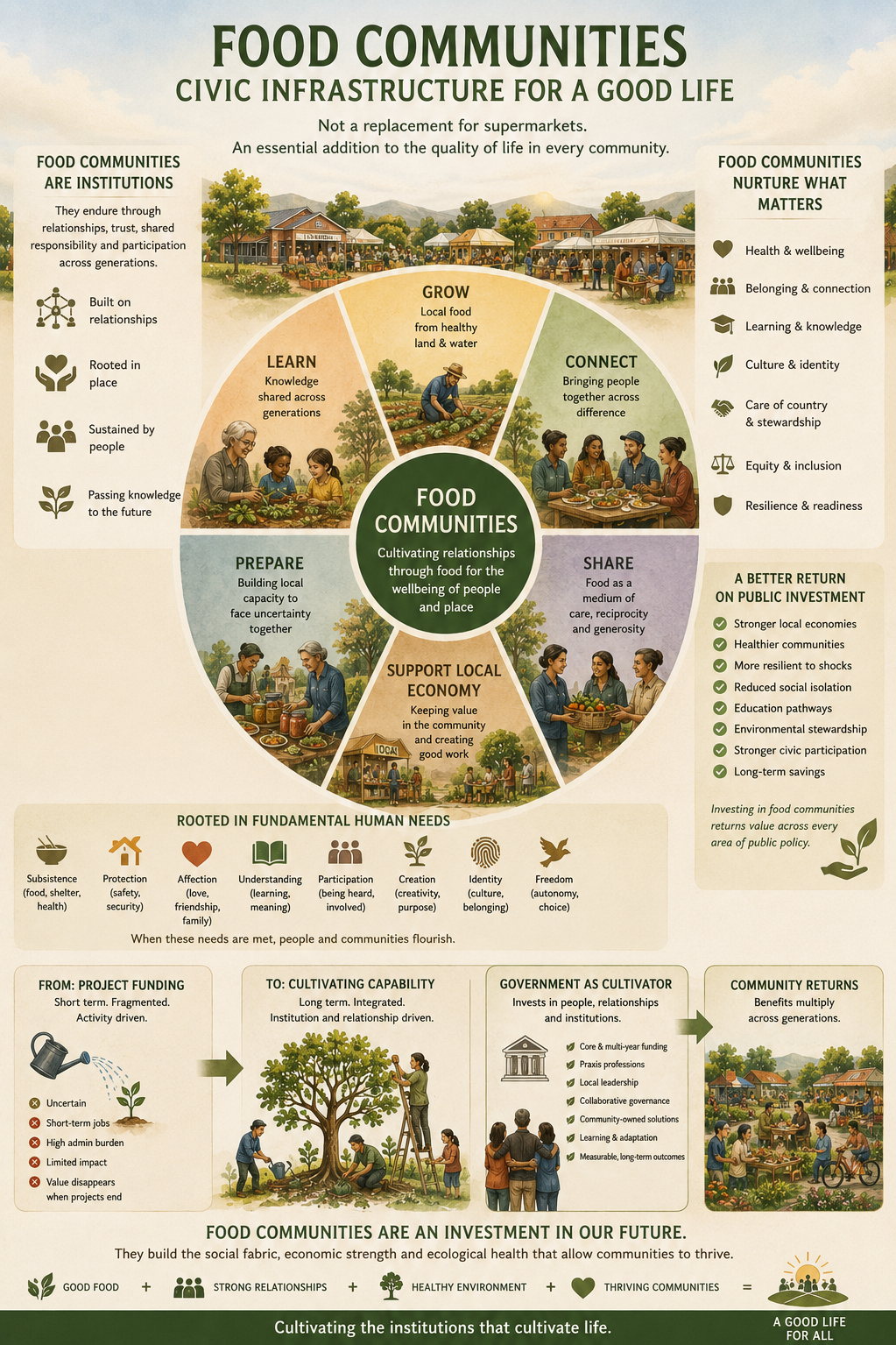
The most fascinating insight however is the systemic economic potential.

If a model like this were scaled across Australia

- 50,000 food communities

- serving 25 households each

- with a $55 weekly food box

- operating 45 weeks each year

this simple multiplication produces a remarkable result. $3.09 BILLION each year flowing directly into local farm and food economies....Not through complicated infrastructure but through communities and farmers working together.

A useful Australian case study that shows the policy potential of this thinking is the Huon Valley Food Hub in Tasmania, where collaboration between farmers, local government, and community initiatives created a regional food distribution system that strengthened farmer livelihoods while reconnecting communities with local produce. The project demonstrated how relatively small investments in coordination, logistics, and community engagement can unlock significant value in regional food economies.

Peach n Pear was a small living experiment, yet within it lies a glimpse of a different kind of food system where communities, farmers, and land are woven together through relationships and shared stewardship of food.

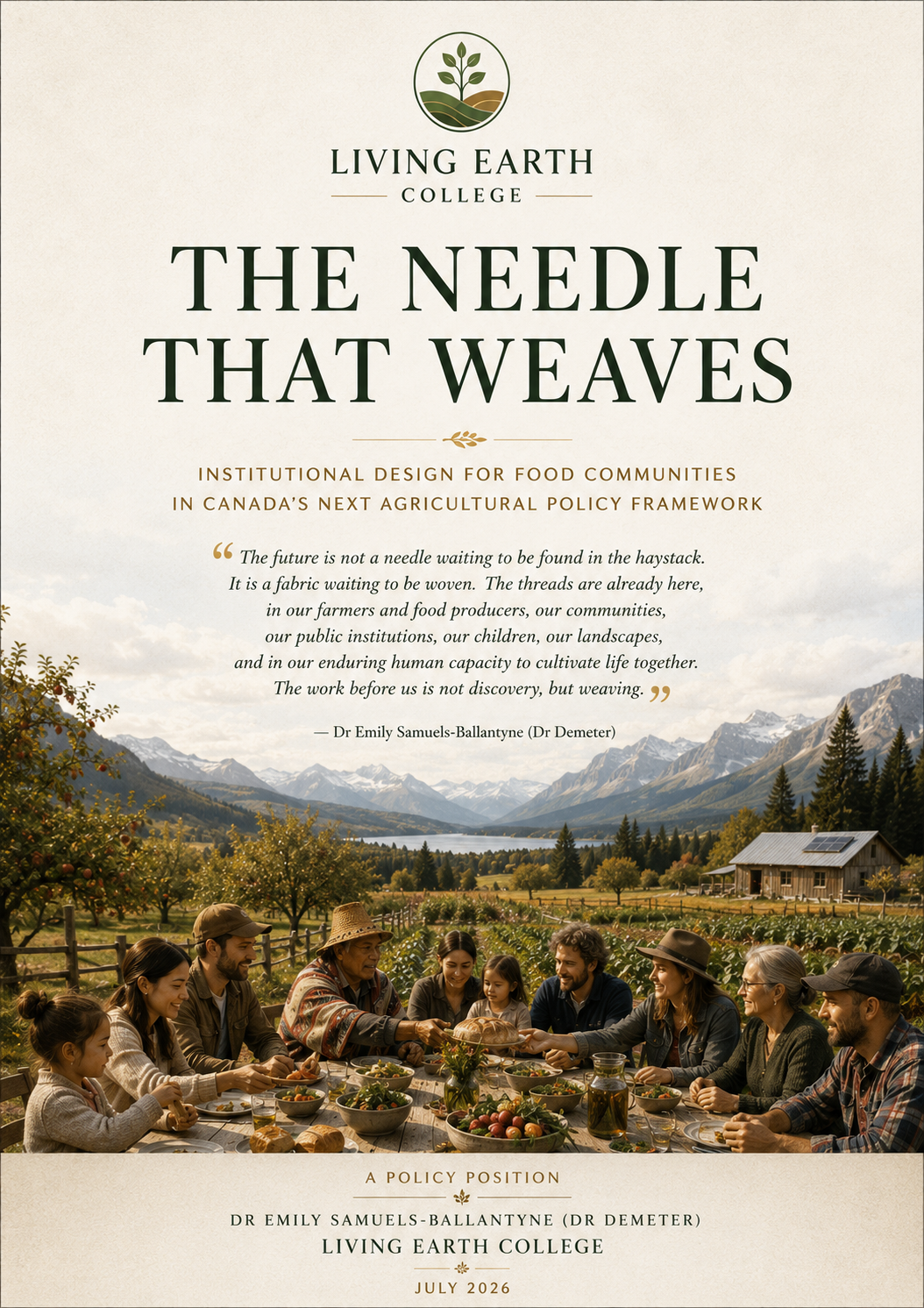
These lessons now inform my work through Living Earth College and the course Activating Local Food Systems, where designers, policy makers, farmers, and community organisers explore how to cultivate practical food economies that nourish both land and society.

Food systems change is not only about policy. It is about communities remembering how to organise around food again.

Check out www.livingearthcollege.org to join our Activating Local Food Systems Course

Contact Dr Emily Samuels-Ballantyne at Con Viv Design Studio if you would like to collaborate on policy work www.convivdesign.org

#localfoodsystems

#sustainablefoodsystems

#regenerativeagriculture

#farminglivelihoods

#communityfood

#foundationaleconomics

#foodpolicy

#livingearthcollege

Activating Local Food Economies

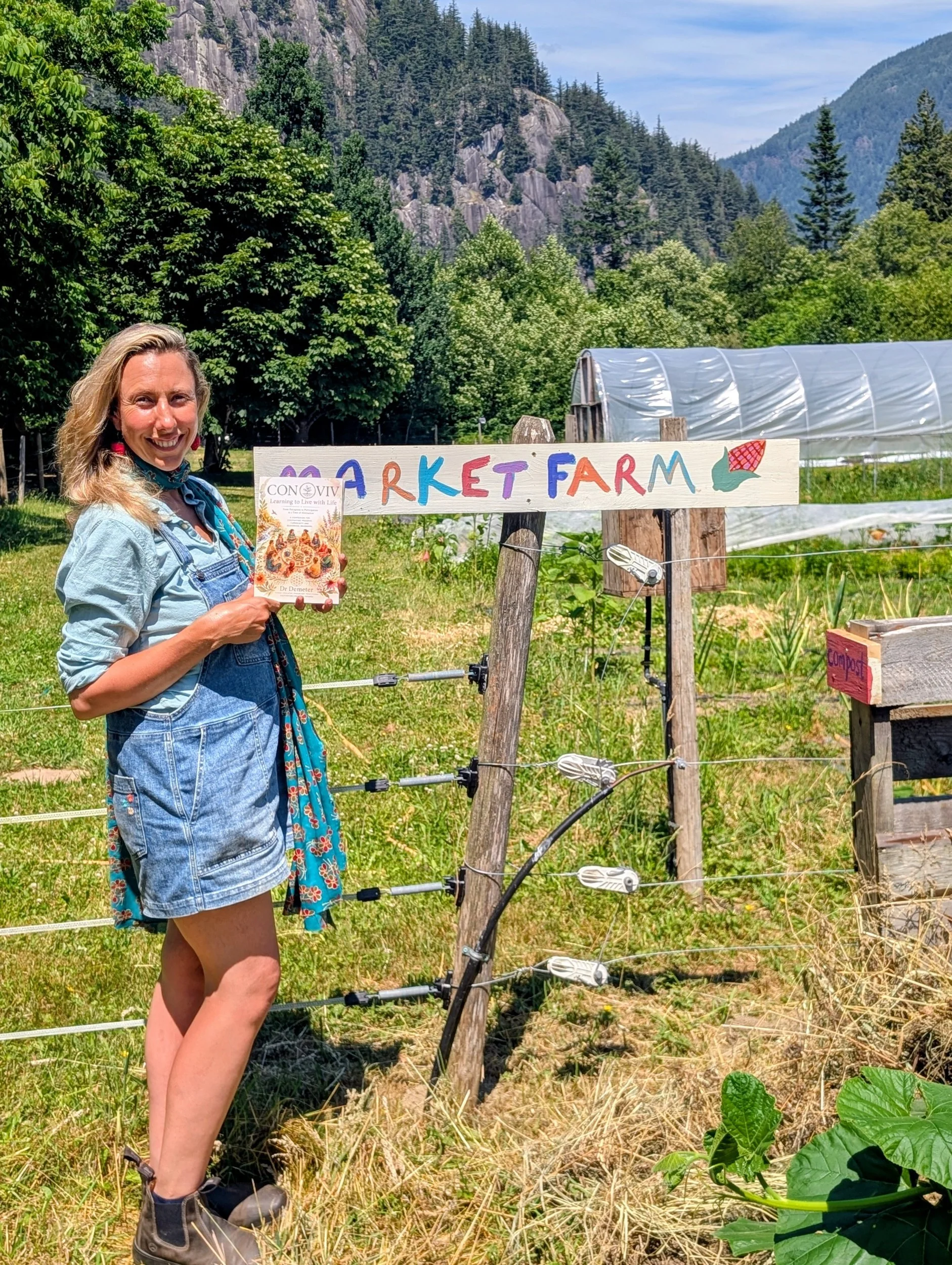
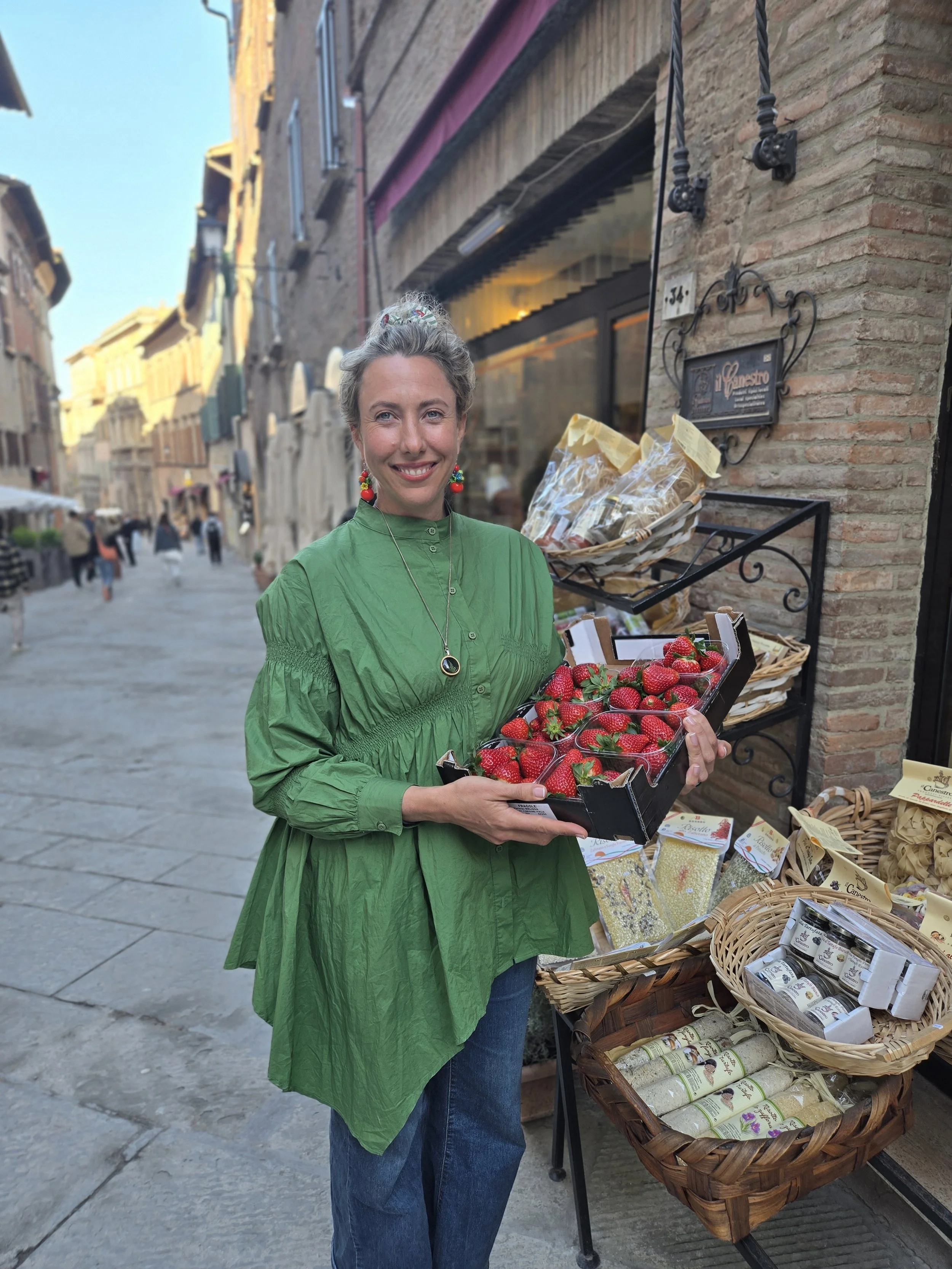
Most food policy is written in offices. But real food systems live on farms. In this video from my Food Policy Series, I explore why meaningful food systems transformation must begin by listening to small farmers, bioregional food cultures, and local food economies. Standing on a small farm in Italy, this conversation reflects on a simple truth: much of the public investment in food systems still flows toward documents, strategies and consultation processes, while the lived knowledge of farmers and regional food systems remains under-recognised.

If we want resilient food systems, we must begin to rebalance this, amplifying the voices, practices and ecological knowledge that already sustain communities. This perspective informs my work through Living Earth College and the course: Activating Local Food Systems https://livingearthcollege.org/enrolment-courses/activating-food-systems

In the course we explore how practical initiatives: food hubs, seed libraries, compost systems and local distribution networks, can generate the living knowledge needed to inform better food policy. Food policy should not only be written about life. It should be created with life. food policy local food systems regenerative agriculture small farmers community food systems bioregional food systems food system transformation foundational economics regenerative food policy local food economies

Standing here on a small farm in Italy, I’m reminded how much wisdom lives quietly in places like this.

Farmers carry deep knowledge of soil, seasons, weather, seeds and local food cultures. They are caring for landscapes and feeding communities every day, often with very little recognition. I believe we need to listen to these voices more closely.

At the same time, there is a gentle truth that deserves our attention: much of the public resource dedicated to food systems still flows toward documents, strategies and consultation processes, while the living work of farmers and local food economies receives far less support.

What if we began to rebalance this?

What if more of our attention, research and investment flowed directly toward the people and places where food systems are actually lived and cultivated?

When we honour farmers, communities and regional food cultures, we begin to see that the knowledge needed for resilient food systems already exists. Our task is simply to recognise it, learn from it and allow it to inform how policy evolves.

This is the spirit behind Activating Local Food Systems - learning with life, and allowing real practice to guide the future of food policy.

#foodpolicy

#localfoodsystems

#regenerativeagriculture

#foundationaleconomics

#smallfarmers

#communityfood

Activating Local Food Systems: Where Policy Meets Practice in Real Places

Food systems won’t change through documents alone. This is the shift - from paper… to practice.

Inside this course, we work with a design-led methodology to bring ideas into real-world projects, tested, adapted, and evolved in context. It is safe to try. Safe to fail. And powerful enough to create meaningful change. This space is for policymakers, practitioners, and changemakers who are ready to move beyond strategy and into activation.

If this work resonates with you, you’re already part of the field. → Join Activating Local Food Systems: https://livingearthcollege.org/enrolment-courses/activating-food-systems → Why this course exists: https://livingearthcollege.org/why-enrol

Come and work alongside me. Let’s activate what’s ready to grow. #ActivatingFoodSystems #FoodPolicy #LocalFoodSystems #RegenerativeAgriculture #SystemsChange #DesignLed #PolicyToPractice #RegenerativeDesign #PlaceBased #CommunityFood #Agroecology #FoodSecurity #CircularEconomy #LivingEarthCollege

Creating Lived Outcomes for Local Food Systems

This video presents a practical call to strengthen local and regional food systems as a foundation for resilience, public value, and territorial regeneration.

It argues that the real challenge is no longer a lack of ideas, but the gap between policy ambition and implementation on the ground. By supporting place-based food economies, collaborative governance, and community-scale activation, institutions can help translate food security, sustainability, and social cohesion goals into lived outcomes.

How Communities Can Activate Local Food Systems A Free Online Seminar from Living Earth College

A Free Online Seminar from Living Earth College

Across many regions of the world people sense that something in our food systems is not working as it should.

Farmers are working harder for smaller margins. Communities often feel disconnected from the land that feeds them. Infrastructure designed for large-scale systems can make it difficult for smaller producers to reach local markets. At the same time many people are searching for practical ways to strengthen food security, regional economies and community wellbeing.

Yet within these challenges there are also opportunities.

When we begin to look closely at food systems we see that they are not simply supply chains. They are living systems shaped by relationships between soil, farms, infrastructure, community economies and policy.

A personal invitation

Over many years I have worked with farmers, communities, and local governments exploring how stronger local food systems might emerge. Through initiatives such as the Docklands Food Garden, the Huon Valley Food Hub, the Peach & Pear Food Box, and the Shepparton Food Hub, I saw both the potential of community food initiatives and the structural barriers that often prevent them from flourishing.

My doctoral research reflected on these experiences and asked a simple question:

What conditions allow local food systems to truly thrive?

Living Earth College was created to share these insights and support people working to strengthen food systems in their own regions. If you feel called to participate in this work, I warmly invite you to join the first cohort.

Dr Emily Samuels-Ballantyne
Founder, Living Earth College

Strengthening food systems therefore requires more than a single solution. It requires the ability to understand how these elements interact within a particular place.

Over the past decade this work has been explored through the Con Viv approach, a living systems design process developed through practical work across farms, community food initiatives and regional policy.

The approach begins with careful observation of land, soil and local conditions. From there it explores how food systems can be strengthened through community enterprise, regional infrastructure and supportive policy frameworks.

This work has led to the development of Living Earth College, an educational initiative exploring practical pathways for activating local food systems.

To introduce this work, Living Earth College is hosting a free online seminar exploring how communities can begin strengthening food systems within their own regions.

Free Seminar

Activating Local Food Systems

In this session we will explore:

• why many food systems struggle to support both farmers and communities
• how local food networks can strengthen regional economies
• the role of infrastructure such as food hubs and distribution systems
• how community initiatives and policy can work together
• practical examples of food system activation

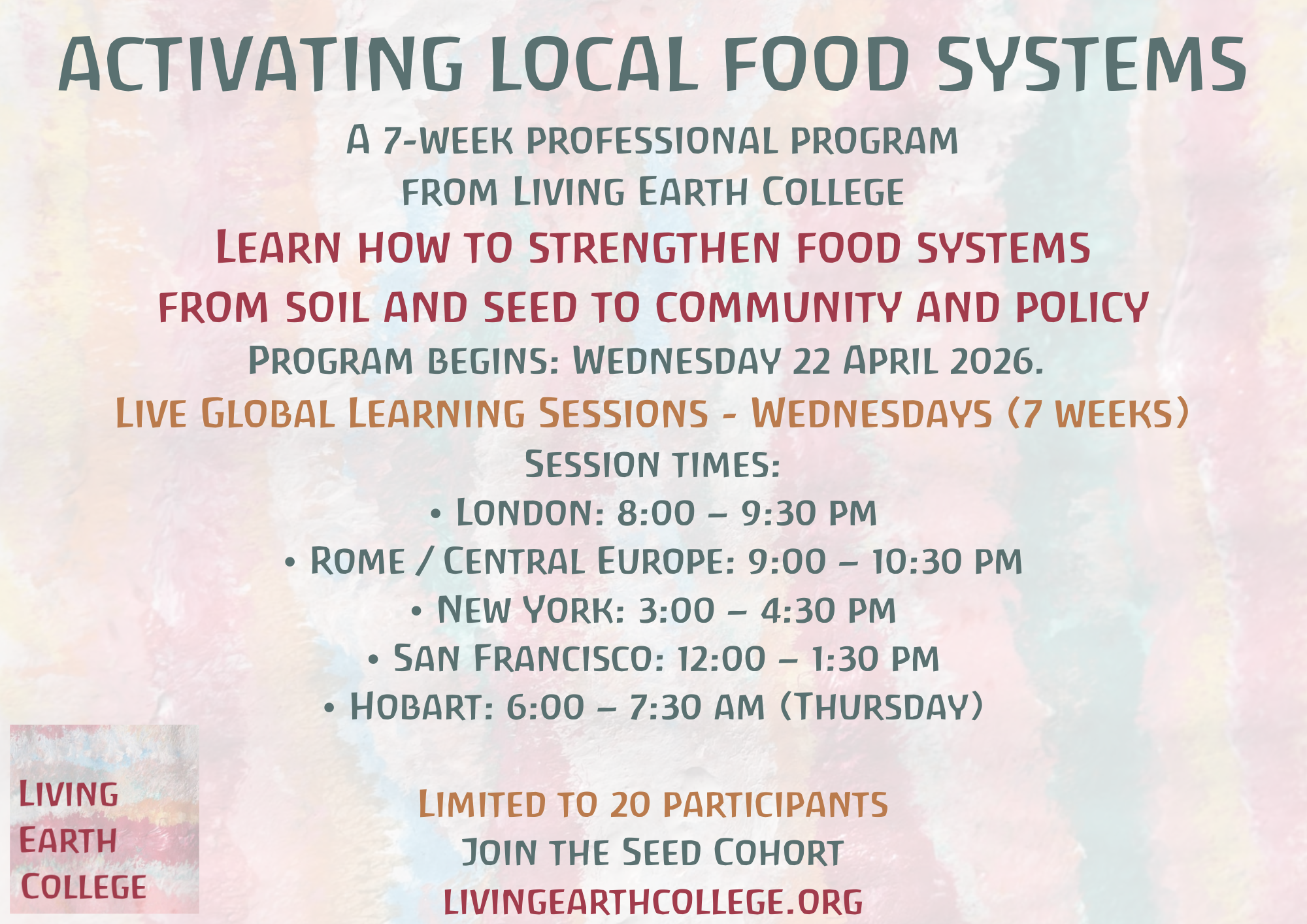
The seminar will also introduce the Activating Local Food Systems program from Living Earth College, a seven-week international course exploring these themes in greater depth.

Who This Seminar Is For

This conversation may be valuable for:

• farmers and land stewards
• community food organisers
• designers and planners
• educators and students
• policy practitioners
• anyone interested in strengthening food systems where they live

Join the Conversation

Strengthening food systems is not only about agriculture. It is about how land, community, economy and governance can work together to support thriving regional life.

If you are interested in exploring how this work might apply in your own region, you are warmly invited to join the seminar.

[Register for the free seminar]

Why We Created the Activating Food Systems Course

The Living Earth College Activating Food Systems course grew from many years of working with farmers, communities, designers and policy makers who all sensed the same problem: modern food systems have become disconnected from soil knowledge, community participation and practical decision making.

Most courses talk about food systems. This one helps you design one. In the Activating Food Systems course you will develop a practical project to strengthen a local food system in your own region.

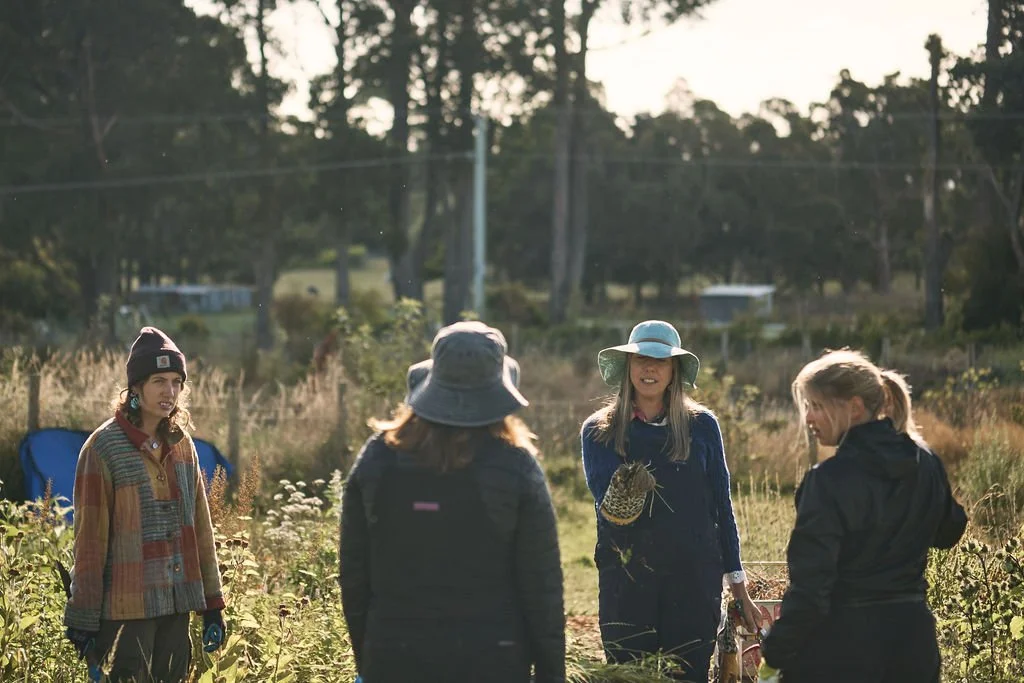
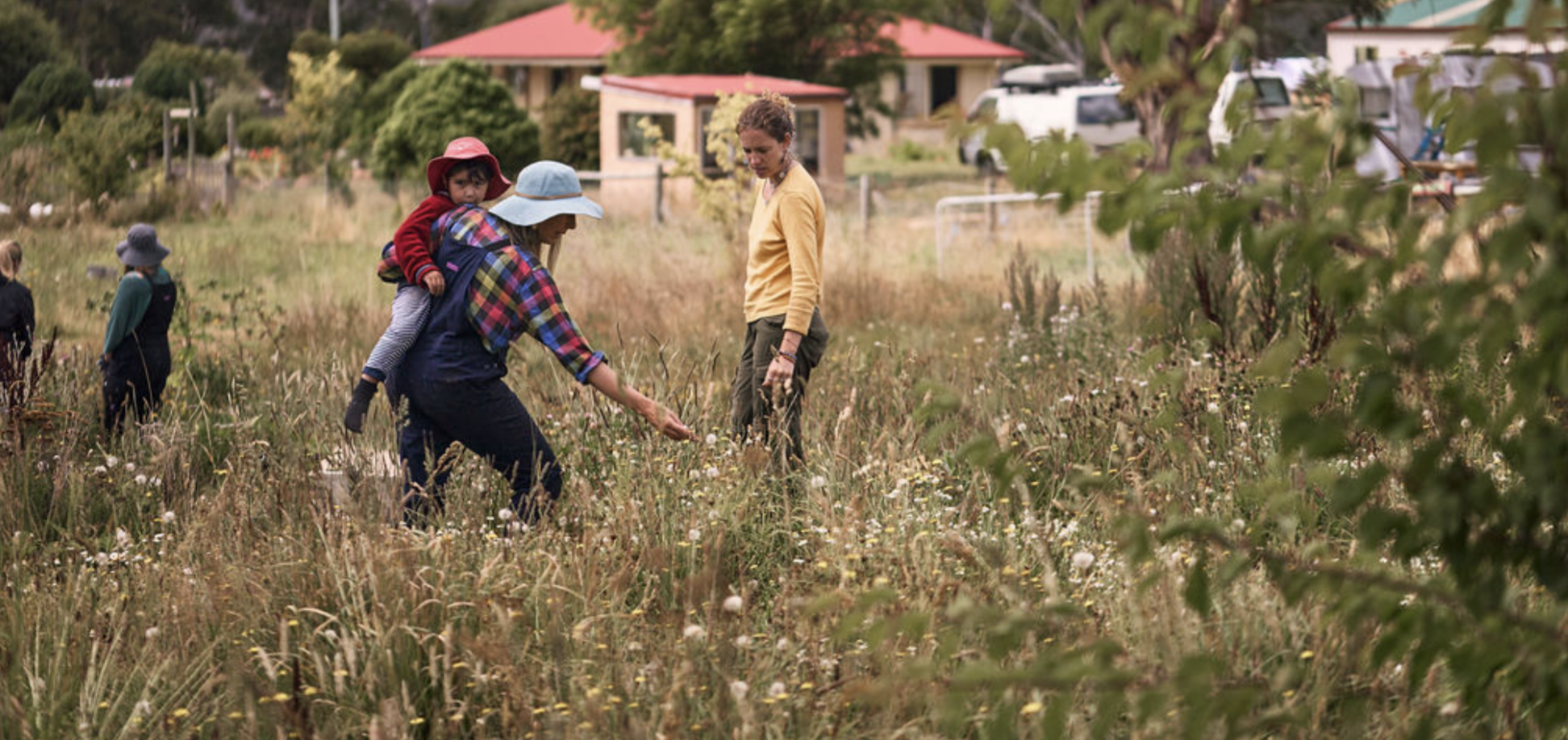
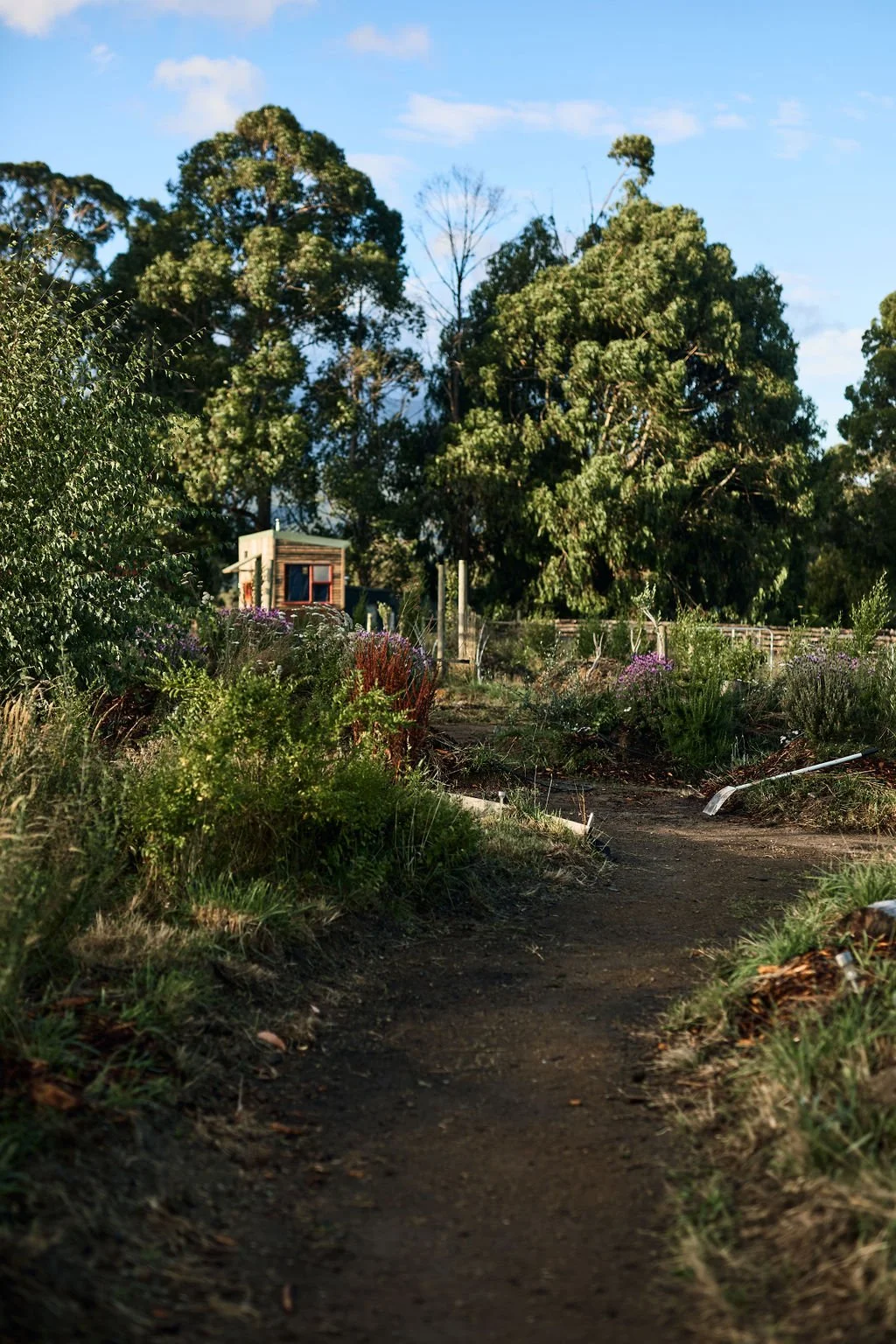
On Magical Farm Tasmania I asked a simple question: what would it look like if communities could actively shape their own food systems again?

Photography by Ness Vanderburgh

Over twenty years my explorations in designing thriving food systems expanded across Tasmania and internationally through design research, teaching and collaboration. The result is this course.

Activating Food Systems is designed to bring together practical knowledge of soil health, regional food networks, community enterprise, economics and policy design.

Participants explore how small scale farms, local markets, schools, councils and citizens can work together to regenerate food systems from the ground up.

The course is not abstract theory, it is grounded in lived practice, observation and collaborative design. Each participant develops their own project idea supported by dialogue, examples and shared learning.

My hope is that people around the world who care about food, land and community will find this work and feel encouraged to act where they live.

Photography by Ness Vanderburgh

If you are searching for practical ways to strengthen your local food system, this course is an invitation to begin together now. With courage, clarity and care for soil, people, place everywhere.

With life “Con Viv” and Love

Dr Demeter / Dr Emily Samuels-Ballantyne

We Are All Designers of Food System

Design is often treated as a professional discipline practised in studios, universities, and consultancies. It shapes products, services, environments, and policy. But design did not begin with institutions. Tools were designed. Language was designed. Markets were designed. The supermarket, the local market, and the digital platform are all designed systems that shape how money moves, how food travels, and how power is distributed.

In this sense, we are all already designers. The deeper question is whether we understand the living systems within which we are designing.

Food systems are not only logistical or agricultural. They are ecological, cultural, economic, and perceptual. What we eat, where we buy, how we organise daily life, and how we participate in community all shape the wider social and ecological organism. When value moves through distant, centralised supply chains, local landscapes and communities weaken. When it circulates through small farms, local markets, and regional food economies, resilience grows.

Food is also formative. Healthy land produces healthy food. Healthy food supports healthy bodies. Healthy bodies enable clearer perception. Clearer perception supports wiser design. This loop connects soil, culture, economy, and civic life.

This understanding sits at the heart of Con Viv, or convivial living systems design. It is also the foundation of the Activating Food Systems Course at Living Earth College.

The course explores how local food systems can be strengthened from soil to society. It brings together living systems design, regenerative practice, place-based observation, community-scale food infrastructure, and policy thinking. It is designed for farmers, designers, educators, policymakers, and community leaders who want practical ways to participate in food system renewal.

Living Earth College is emerging as a translocal education platform for life systems literacy. Its work asks a simple but urgent question: what would change if soil, food, local economies, and civic participation were treated as foundational to education and design?

We are already shaping the future through our habits, choices, and structures. The invitation of the Activating Food Systems Course is to do so more consciously, and in service of living systems.

Photography by Ness Vanderburgh

Festive Agriculture: A Living Bridge Between Cosmos, Community, and Cultivation

By Dr Demeter | Emily Samuels-Ballantyne

At the Agricultural Section gathering of the Spiritual Science Community of Australia in May 2025, a shared sense of joy and purpose emerged as participants explored a new-old concept: Festive Agriculture with presenters from Bio-dynamics Tasmania Julia Yelton, Kirsten Robinson and myself. Rooted in Biodynamic principles and enriched by global traditions and cosmic wisdom, this term resonated deeply with the conference participants, sparking stories, laughter, memories of intergenerational farming, and visions for a more connected future through sacred agriculture.

In our presentation, we introduced the ABC of Festive Agriculture: Anthroposophy as the spiritual foundation, Biodynamics as the living method, and Community as the heart of celebration and connection. Together, these three elements weave a holistic approach to farming that honours the cosmic, the earthly, and the social as one living whole.

The phrase Festive Agriculture offered something unexpected: accessibility. One participant joked, “I finally have a way to tell my mates what I do “Festive Agriculture” and they’ll get it. That comment echoed throughout the room, highlighting a central theme of our workshop: while Steiner’s Biodynamic agriculture holds profound spiritual and cosmological wisdom, the language around it often remains opaque or misunderstood in wider circles. Festive Agriculture may be one way to gently bridge this gap?

What Is Festive Agriculture?

Festive Agriculture, as presented in our paper, is not a method or a system, but a living relationship with the land. It is the weaving together of cosmic rhythms, seasonal cycles, and community life into an integrated whole. It calls in both ancient and the emergent, in many ways unseen worlds in our materialistic times. Drawing on Biodynamic practices, First Nations sky knowledge, and traditional harvest celebrations around the world.

It is not just about growing food, rather it is about celebrating life, honouring the land, ancestors, and future generations. It invites us into rituals and festivals that acknowledge both the practical and the sacred. In Biodynamic farming, this includes planting by moon phases and observing planetary influences. In other traditions, it might involve singing to seeds, feasting with neighbours, or offering thanks to the spirits of place.

Workshop Reflections: Intergenerational Threads

During the workshop, participants shared stories of how Festive Agriculture awakened memories of intergenerational knowledge-sharing, farm life with grandparents, and rural customs nearly forgotten. Several spoke of the need to rekindle these threads, passing down more than just skills, but also the cultural and spiritual sensibility that once animated farming life.

Photography by Ness Vandeburgh Photography

Others reflected on the changing nature of rural life: how industrialisation, individualism, and bureaucratic systems have fractured communal farming traditions. Yet, through seasonal gatherings, Biodynamic convivial farms, and local festivals, there are new opportunities to reconnect. The practice of Festive Agriculture, we agreed, could be a powerful way to reinvigorate land sharing, communal celebration, and learning across generations.

Bridging Biodynamics and Broader Culture

For many in the Biodynamic movement, there is a long-standing wish to make this work more visible and accessible without diluting its depth. We heard from participants who feel torn. On one hand they are deeply committed to the spiritual foundations of Biodynamics, yet unsure how to speak about it outside their own communities. Festive Agriculture may offer a gentle entry point, a way to name the joy, the relationships, and the cosmic consciousness embedded in these practices?

This is not about rebranding Biodynamics, but about opening new pathways for engagement, especially with younger generations, artists, educators, and those interested in food, culture, and ecology. If we can frame farming as both practical and festive, grounded and celebratory, it becomes a more inviting field of belonging.

The Role of Festivals and Ritual in Land Care

In our paper, we explored agricultural festivals from Japan to the Andes, from Indigenous Australian calendars to the European solstice rituals practiced on Biodynamic farms. Despite vast differences, these traditions share key themes: cosmic alignment, sacred reciprocity, seasonal awareness, and community celebration.Festive Agriculture takes inspiration from these examples. It honours planting and harvesting not just as labour, but as opportunities for joy, storytelling, feasting, and song. In doing so, it rekindles the human side of land care, not just as a responsibility, but as a form of belonging and shared purpose.

Events like the Cygnet Crop Swap, Bio-Dynamics Tasmania field days or the seasonal festivals and workshops at Magical Farm Tasmania demonstrate that even in our modern world, agricultural festivals still hold a place. They offer space to exchange food and knowledge, and to remember that food is not a commodity, it’s a relationship.

A Call to Celebration

In closing, Festive Agriculture is both an ancient memory and a future possibility. It offers a way to bring Steiner’s vision of the farm as a living organism into dialogue with wider cultural movements for ecological renewal, food sovereignty, and spiritual reconnection. What we plant in the soil matters, but so does what we plant in culture. Festivals, gatherings, stories, and rituals are vital nutrients for our communities and for the earth. By celebrating the cosmic, seasonal, and communal dimensions of farming, we may grow not only food, but a deeper joy, a stronger culture, and a future rooted in reverence.

As one participant said, “This has opened a doorway. I can feel the future pulling us toward something beautiful.” That something may well be Festive Agriculture, not a trend, but a return to something we never truly lost.


Con Viv ‘with life’ & Love,

Dr Demeter

Review on the work of Elisabeth Vreede: Keeper of the Stars and initiator of the Goetheanum Archive

Elisabeth Vreede (1879–1943) deserves to be celebrated for her phenomenal: a mathematician and astronomer who helped give anthroposophy a backbone of disciplined thinking, and a cultural guardian who quietly built the Goetheanum’s library and archive so the movement could remember itself with accuracy.

She was appointed head of the Mathematical-Astronomical Section of the School of Spiritual Science at the Goetheanum in 1923, and her life shows how the “cosmic” in anthroposophy is not meant to be dreamy, but exact: an education of perception, rhythm, and responsibility. Maths and science is spiritual, thanks to her.

When people ask what her main work is, I point to two streams:

1) The first is her sustained, practical teaching: between 1927 and 1930 she wrote monthly “astronomical letters” that bridge modern astronomy and classical astrology in the light of spiritual science; these were later published in English as Astronomy and Spiritual Science: The Astronomical Letters of Elisabeth Vreede.

2) The second stream is the German-language legacy, including Astronomie and Anthroposophie (Verlag am Goetheanum, Dornach) and the biographical work Elisabeth Vreede: Ein Lebensbild by M. P. van Deventer, which shines light on the moral texture of her life.

Portrait found on Wikimedia

Her story carries a sober lesson for any community that claims spiritual ideals. In 1935 she was removed from leadership and cut off from the very observatory and archives she had helped assemble, and her last years became increasingly isolated; she died in Ascona, Switzerland, in 1943.

To honour Elisabeth Vreede is an ethical act: remembering a woman who served the future through precision, and asking whether our own communities can learn to receive such clear-thinking devotion with the warmth it deserves.

With life ‘con viv’ and Love,

Dr Demeter