About
Photography by Ness Vanderburgh
About Living Earth College
There is a gap between what we know and what we are able to do. Universities produce knowledge, research and professional expertise. Local governments develop policy, plan infrastructure and deliver services. Non-profit organisations and community groups advocate for change and work tirelessly on the ground. Farmers and local enterprises hold generations of practical knowledge about place.
All of these are essential, and increasingly they are looking for ways to collaborate.
There is a space between them where much of the real work of change needs to happen: the space where people can bring knowledge, experience, institutions and place together and actually work out what to do.
This is the space Living Earth College is beginning to inhabit.
I created Living Earth College as an independent educational initiative, a kind of third space within the institutional landscape where people can learn through real projects, develop new ways of seeing and working, and collaborate across the boundaries that so often separate education, government, community and practice.
Our focus is local food systems, because food connects almost everything: land, ecology, health, culture, livelihoods, infrastructure, economics and governance. We bring together living systems thinking, Goethean observation and Con Viv Design to help people understand the relationships within a place and develop the confidence and capability to act within them.
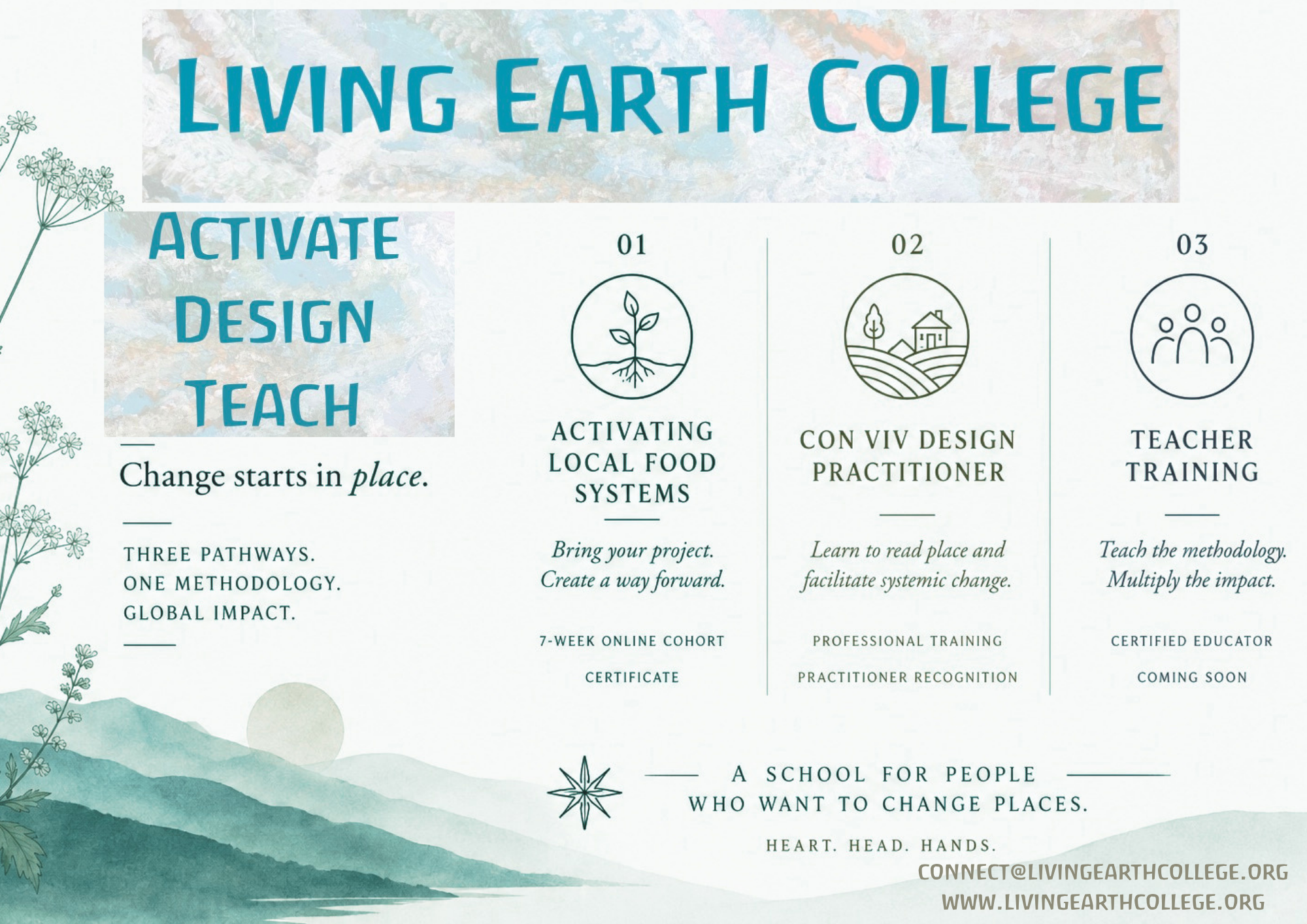
Through Activating Local Food Systems, Con Viv Design Practitioner Training (through our in-person Labs) and, in time, Teacher Training, Living Earth College is building a global learning community of people who want to strengthen the places they live and work.
Not replacing universities, government or community organisations role BUT
Creating a space where we can work together differently.
This is why Living Earth College exists
Learning to live with life.
Connect with us: connect@livingearthcollege.org
Photography by Ness Vanderburgh
A living systems approach
Living Earth College explores food systems as living systems through the Con Viv Design Framework.
Healthy food systems emerge through relationships between land, farmers, communities, infrastructure, and governance. They require both practical agricultural knowledge and the capacity to organise cooperative systems that support local economies.
The college’s educational programs therefore explore multiple layers of food systems, including:
• soil and farm ecosystems
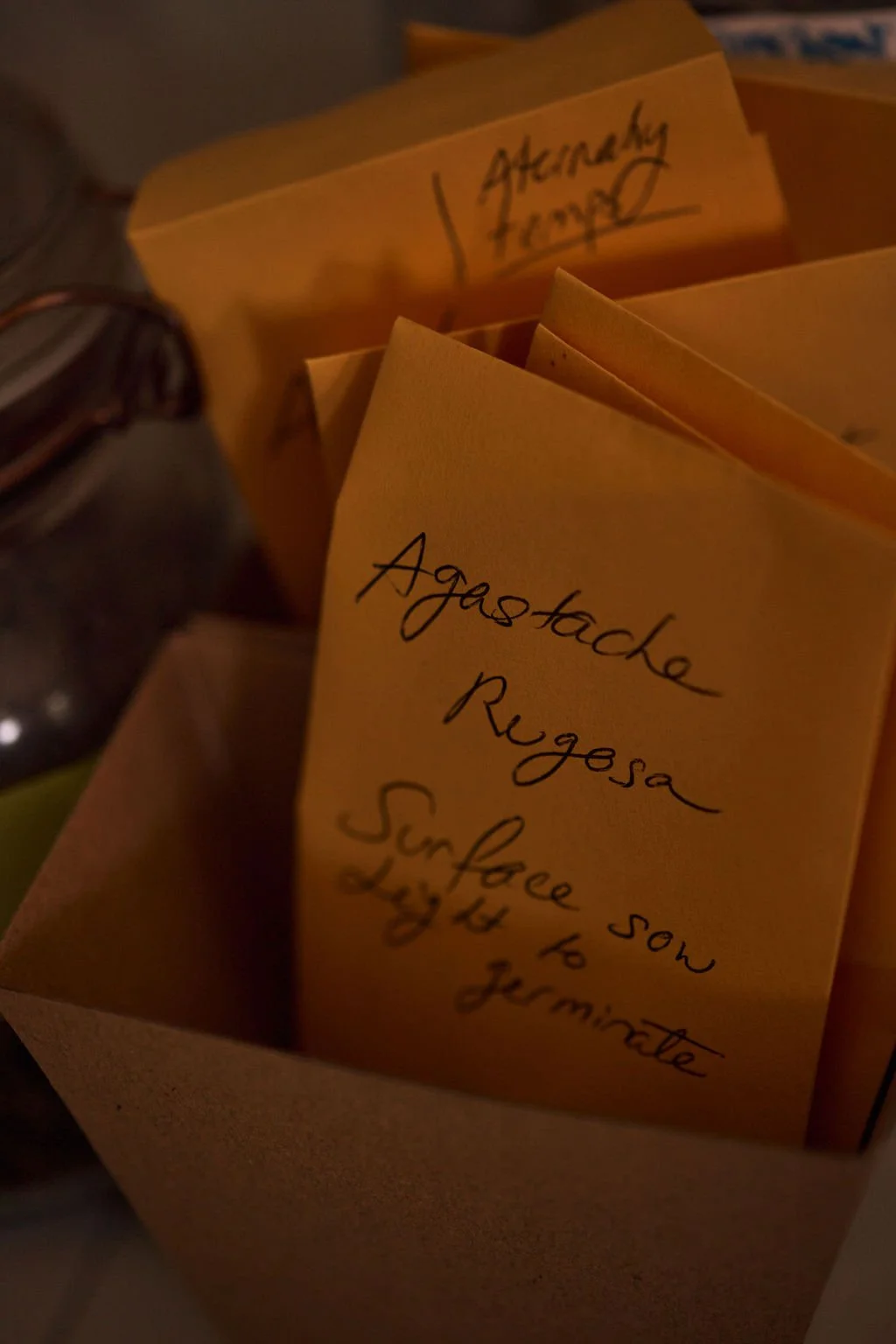
• seed diversity and crop exchange
• community food economies
• regional food infrastructure
• governance and policy frameworks
Here is an introduction to the College’s Con Viv Methodology to Design:
Con Viv Explained | Lecture 1: The Seven Principles for Living with Life What if the challenges facing our food systems, communities, economies and landscapes are not isolated problems, but symptoms of a deeper pattern of disconnection? In this first lecture, I introduce Con Viv, a living systems framework developed through years of research, practice and observation across farms, communities, policy, education and ecological design. Rather than asking how we can better manage life, Con Viv asks a different question: How do we learn to live with life? This lecture explores the seven foundational principles that underpin the Con Viv approach. These principles are not a checklist or methodology. They are living orientations that help us see relationships, cultivate belonging, strengthen communities and design systems that regenerate rather than extract. Whether you are a farmer, designer, policymaker, educator, entrepreneur, community leader or simply someone searching for a more life-giving way of understanding our world, this conversation is for you. In this lecture you'll discover: • Why many of today's solutions continue to reproduce the problems they seek to solve. • The seven foundational principles of Con Viv. • How living systems thinking changes the way we approach food, economy, governance and community. • Why relationship, not efficiency, is the true foundation of resilient systems. • How these ideas can be applied in everyday practice. Con Viv emerged through my doctoral research in Living Systems Design and continues to evolve through Living Earth College, where research becomes practice and ideas become action. This is the first lecture in a series exploring how we can cultivate cultures that are more resilient, more convivial and more deeply alive. If this resonates with you, please subscribe, leave a comment sharing where you're joining from, and let me know which of the seven principles speaks most strongly to you. Together, we can begin weaving a different future. — Dr Emily Samuels-Ballantyne Founder, Living Earth College Researcher • Policy Designer • Living Systems Practitioner #ConViv #LivingSystems #FoodSystems #SystemsThinking #CommunityDevelopment #RegenerativeDesign #EcologicalDesign #LivingEarthCollege #FoodPolicy #Conviviality #Biodynamics #Leadership #SocialInnovation #Resilience #FutureOfFood
This whole-systems perspective helps participants move beyond isolated projects toward coordinated food systems capable of thriving over time.
Origins
Living Earth College grew from many years of practical food systems work across Australia.
Projects such as the Magical Farm Tasmania, Docklands Food Garden, Huon Valley Food Hub, European Local Food Policy Design, the Peach & Pear Food Box, and the Shepparton Food Hub explored how communities can strengthen local food economies through collaboration between farmers, citizens, and institutions.
These initiatives included the creation of seed libraries, crop swaps, food box programs, regional food infrastructure and policy designed to support small farmers and community food access.
Much of this work has been developed through Con Viv Design, a living systems design practice working across community food initiatives, regional infrastructure development, and policy innovation.
Through Con Viv studio’s work, practical projects, strategic design processes, and policy proposals have been developed to support the emergence of stronger local food systems.
One example is the Grow Small Feed All campaign, a meta-design proposal exploring how public investment and policy frameworks can strengthen small farms, community food infrastructure, and regional food economies.
Together these initiatives form a broader body of work exploring how communities can activate local food systems in practice.
This work later became the focus of doctoral research examining how place-based collaboration, community initiative, and supportive policy can enable resilient food systems to emerge.
Photography by Ness Vanderburgh
From research to living practice
Magical Farm Tasmania emerged as a place where these ideas could be explored through practice.
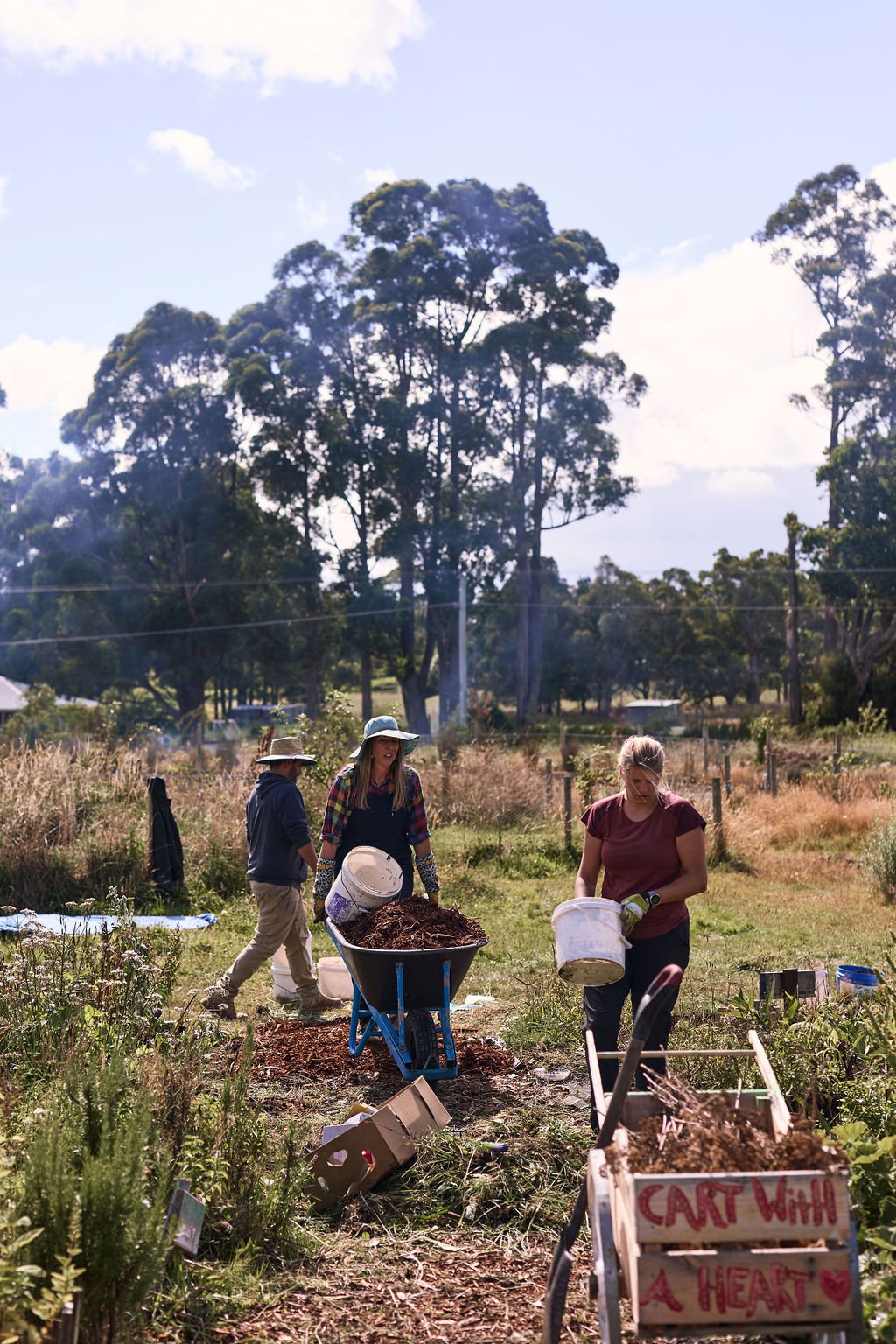
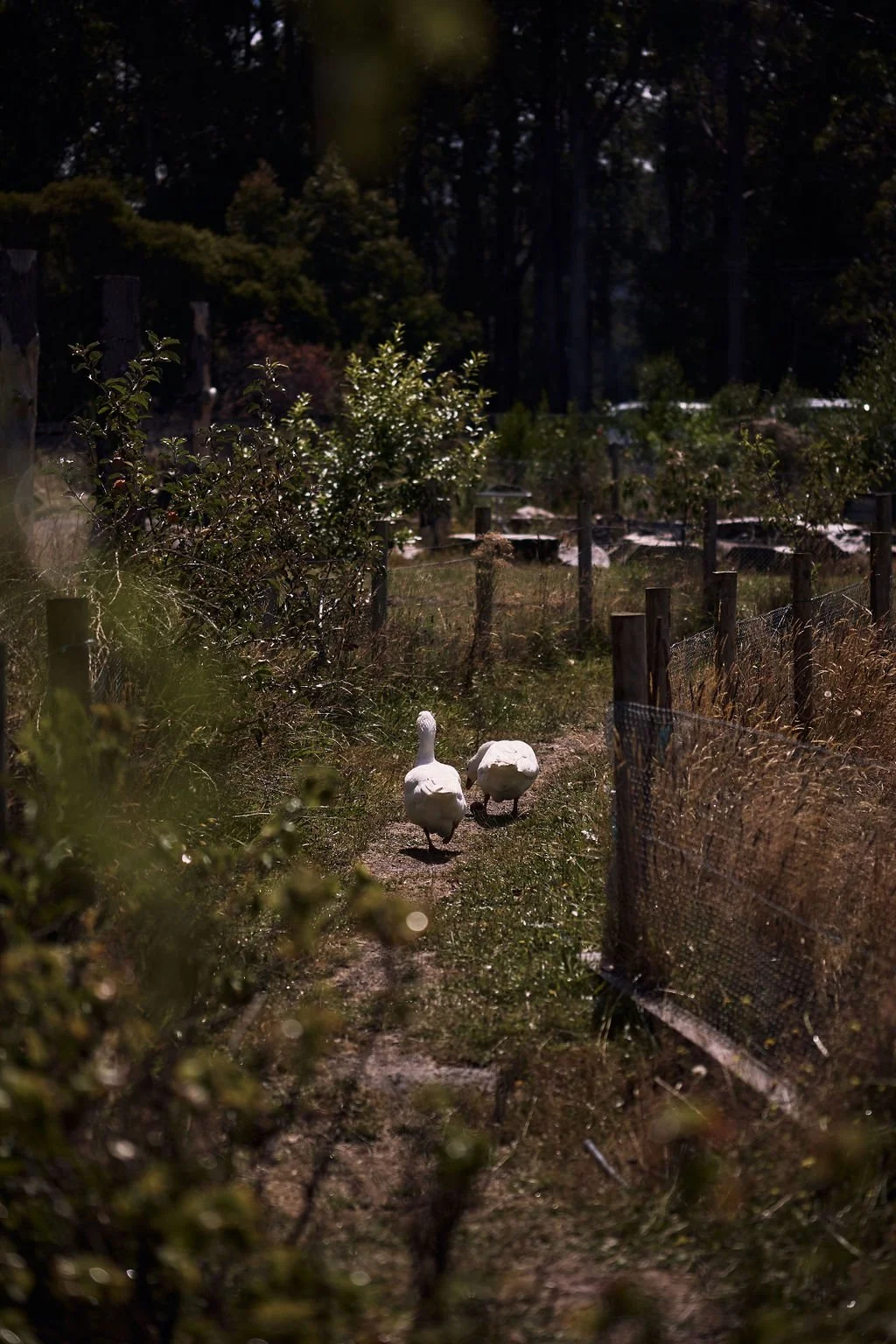
Magical Farm Tasmania is a small biodynamic farm and living landscape in the Huon Valley where soil stewardship, seed diversity, and community food culture have been cultivated through everyday agricultural practice.
Through seed libraries, crop swaps, community gatherings, and land stewardship, the farm became a small but meaningful place where ideas about local food systems could be explored in real life.
At the same time, this experience revealed a wider challenge.
While there is increasing recognition of the importance of local food systems, there are still very few places where these ideas can be implemented and tested in practice. Planning systems, institutional frameworks, and economic structures often struggle to recognise the value of small-scale community food initiatives.
This insight became one of the reasons Living Earth College was created.
The college provides a space where the learning from these experiences can be shared more widely with practitioners working across many regions.
Photography by Ness Vanderburgh
Founder
Dr Emily Samuels-Ballantyne
Founder and Academic Director
Dr Emily Samuels-Ballantyne is a living systems designer, researcher, and practitioner working at the intersection of agriculture, community economies, and public policy.
Her work focuses on how communities can activate resilient local food systems through collaboration between farmers, citizens, institutions, and regional infrastructure.
Emily has developed and supported a range of food system initiatives including the award winning Huon Valley Food Hub, Docklands Food Garden, the Peach & Pear Food Box, COLTIVANDO Convivial Garden at Politecnico di Milano and the Shepparton Food Hub.
Her doctoral research explored how communities can strengthen food systems through place-based experimentation and collaborative governance.
She is also the founder of Magical Farm Tasmania and the director of Con Viv Design Studio.
Through Living Earth College she now works with practitioners across regions and bioregions who are committed to strengthening local food systems.
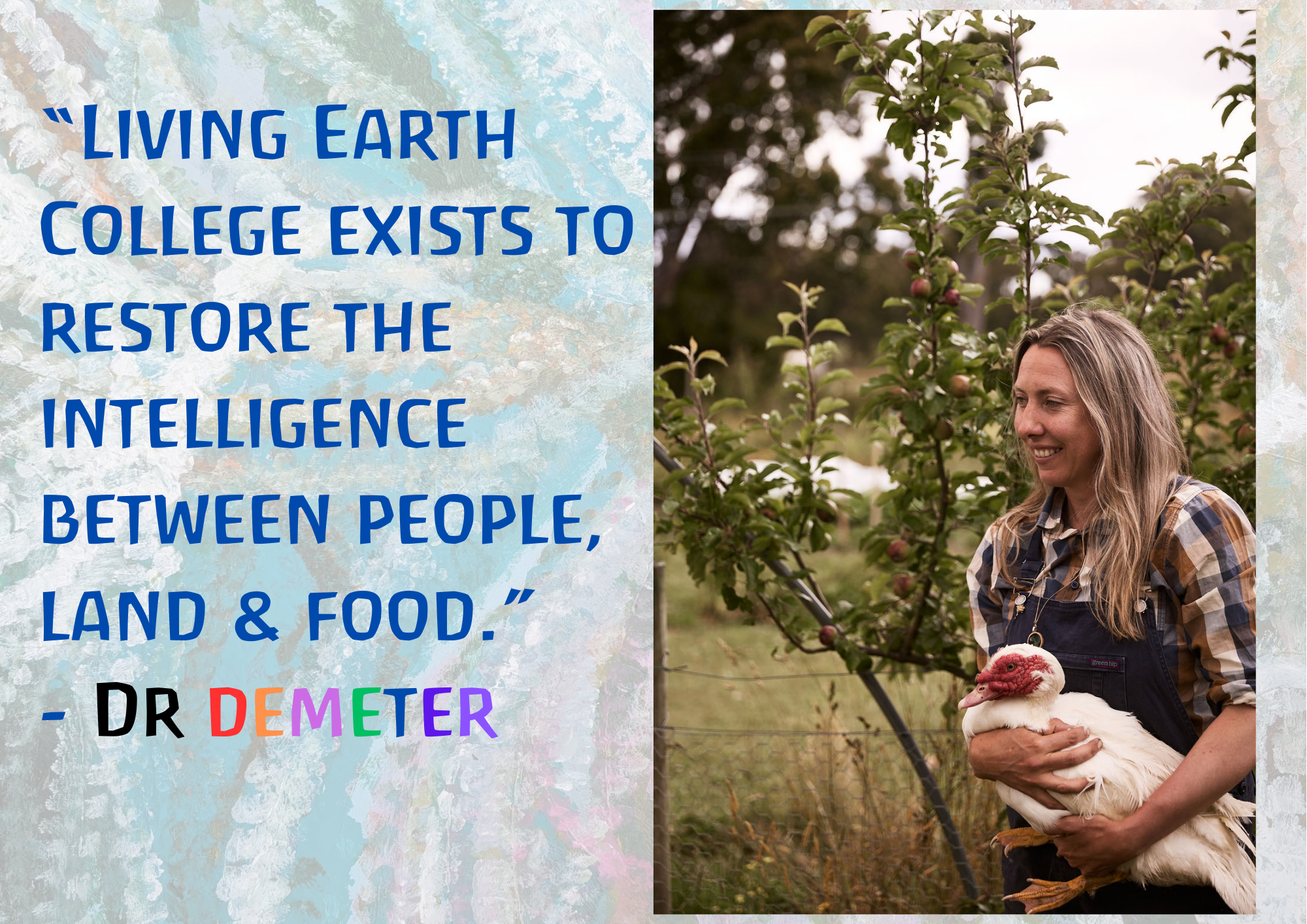
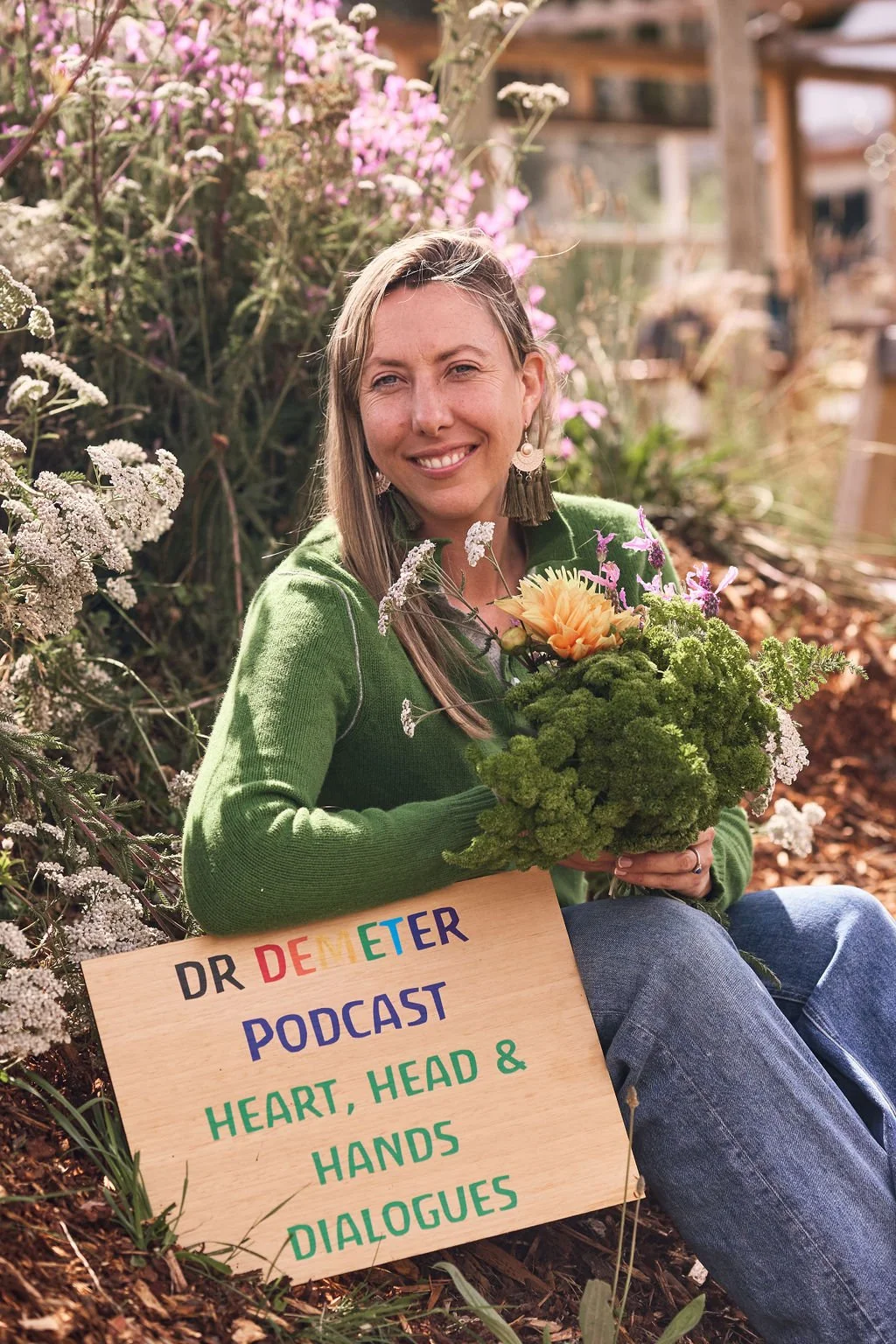
Emily is also known through her creative and educational work as Dr Demeter.
Photography by Ness Vanderburgh
Partners across regions and bioregions
Living Earth College is developing as a collaborative network connecting farms, educational organisations, community initiatives, designers, and policymakers working to strengthen local food systems.
The work of rebuilding resilient food systems is inherently place-based. For this reason the college seeks to collaborate with partners across regions and bioregions, supporting local initiatives while sharing knowledge through a wider learning network.
Partner organisations may host place-based courses, field visits, or regional learning programs that allow participants to engage directly with landscapes, farms, and community initiatives.
Become a Partner
We welcome collaboration with:
• farms and agricultural organisations
• community food initiatives
• regional food hubs
• educational organisations
• research institutions
• local governments and regional development organisations
Partners may host learning programs, field visits, or regional courses connected to the work of Living Earth College.

The Founding Circle
Living Earth College is currently forming a Founding Circle of practitioners, educators, and supporters who wish to contribute to the early development of the college.
Members of the Founding Circle help guide the evolution of the college during its formative years.
The circle brings together people working across farming, food systems practice, education, design, and policy who share an interest in strengthening local food systems.
Founding Circle members receive
• early insight into the development of the college
• invitations to strategic conversations shaping future programs
• connection with a network of practitioners across regions
• recognition as early supporters of the college
• opportunities to contribute to courses, collaborations, and regional initiatives
Join the Founding Circle
If you feel aligned with the vision of strengthening local food systems and would like to contribute to the development of Living Earth College, we warmly invite you to connect with us.
A growing network
From small farms to regional initiatives, the work of rebuilding resilient food systems is already underway in many places.
Living Earth College exists to support those ready to take part.
“From living landscapes to community economies to education for the future of food systems.”
Photography by Ness Vanderburgh