Design is often treated as a professional discipline practised in studios, universities, and consultancies. It shapes products, services, environments, and policy. But design did not begin with institutions. Tools were designed. Language was designed. Markets were designed. The supermarket, the local market, and the digital platform are all designed systems that shape how money moves, how food travels, and how power is distributed.
In this sense, we are all already designers. The deeper question is whether we understand the living systems within which we are designing.
Food systems are not only logistical or agricultural. They are ecological, cultural, economic, and perceptual. What we eat, where we buy, how we organise daily life, and how we participate in community all shape the wider social and ecological organism. When value moves through distant, centralised supply chains, local landscapes and communities weaken. When it circulates through small farms, local markets, and regional food economies, resilience grows.
Food is also formative. Healthy land produces healthy food. Healthy food supports healthy bodies. Healthy bodies enable clearer perception. Clearer perception supports wiser design. This loop connects soil, culture, economy, and civic life.
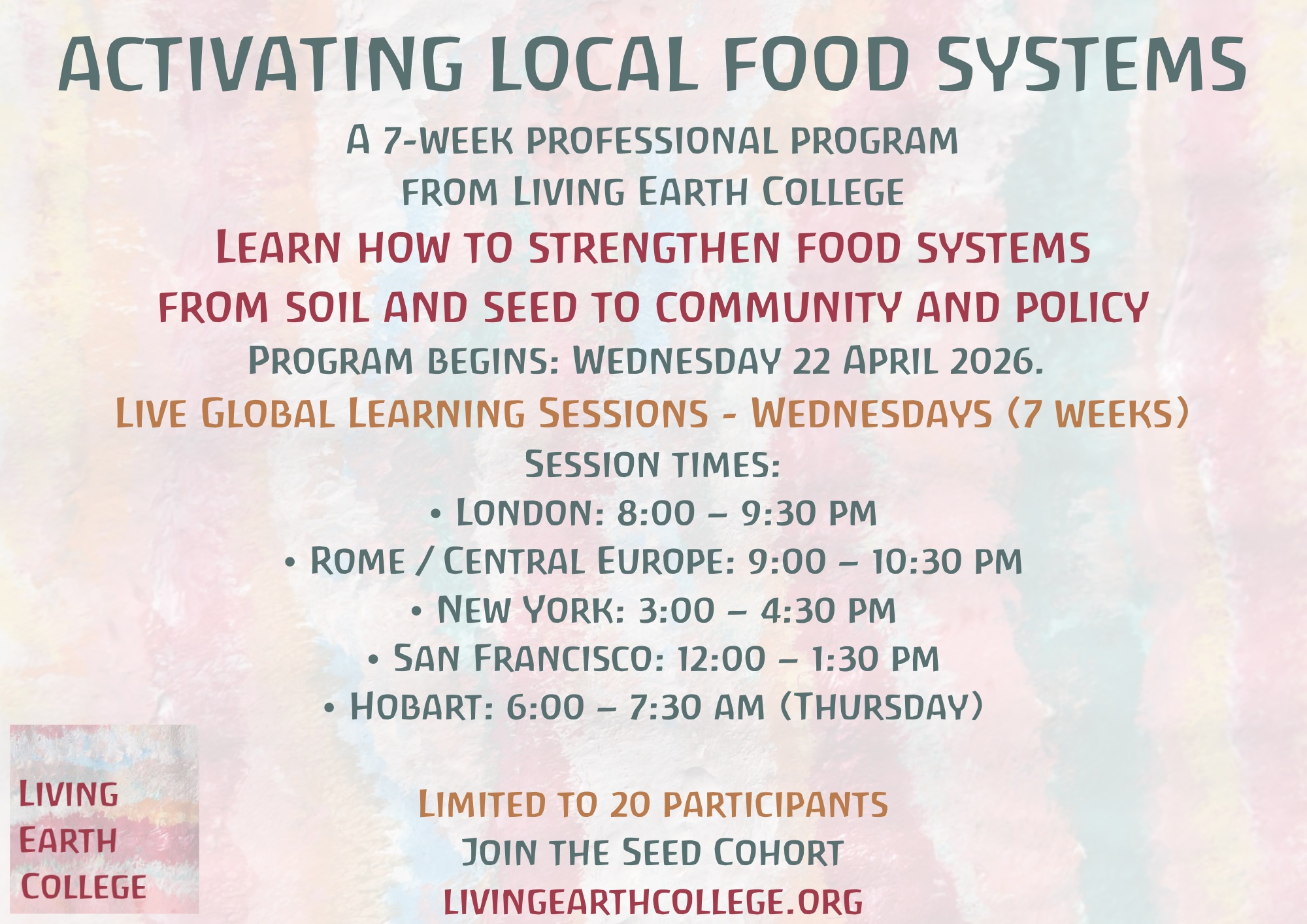
This understanding sits at the heart of Con Viv, or convivial living systems design. It is also the foundation of the Activating Food Systems Course at Living Earth College.
The course explores how local food systems can be strengthened from soil to society. It brings together living systems design, regenerative practice, place-based observation, community-scale food infrastructure, and policy thinking. It is designed for farmers, designers, educators, policymakers, and community leaders who want practical ways to participate in food system renewal.
Living Earth College is emerging as a translocal education platform for life systems literacy. Its work asks a simple but urgent question: what would change if soil, food, local economies, and civic participation were treated as foundational to education and design?
We are already shaping the future through our habits, choices, and structures. The invitation of the Activating Food Systems Course is to do so more consciously, and in service of living systems.
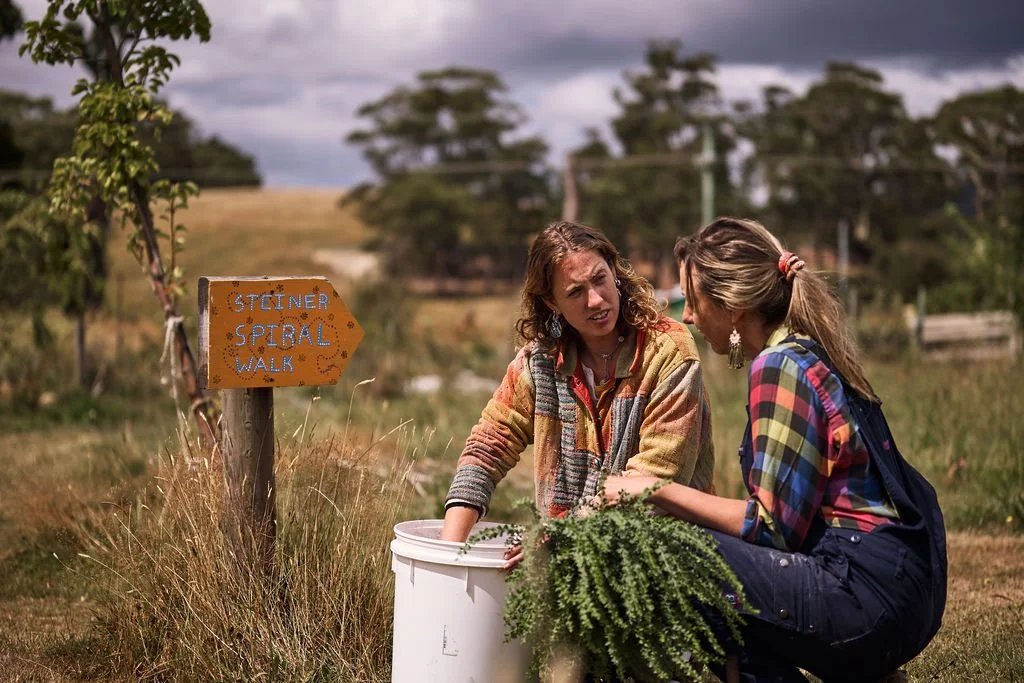
Photography by Ness Vanderburgh