welcome to living earth college
Announcement! We have just launched our 90 minute short course “How to Create a Food Community” on the 30th of April. - Book Here
How to Create a Food Community
A simple pathway for neighbours, families, and citizens to support local farmers and nourish their community
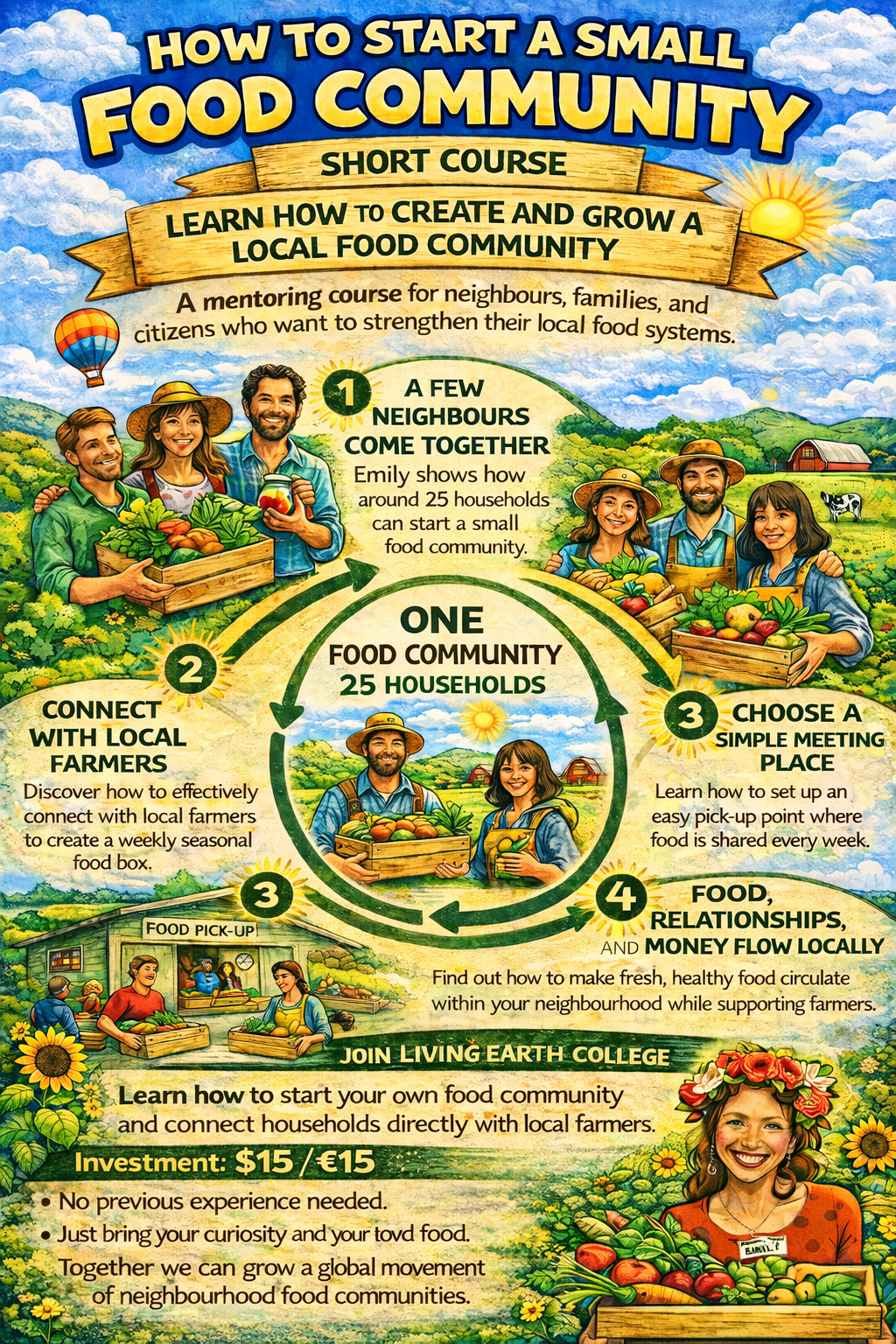
Create a Food Community with Emily’s mentoring at Living Earth College! see you soon. Sign up at this link https://livingearthcollege.org/enrolment-courses/how-to-create-a-food-community
Across the world many people feel that the food system is too large and too distant for ordinary citizens to influence. Yet in towns and neighbourhoods everywhere something remarkable is possible when small groups of people decide to organise food together.
A food community is simply a group of households who connect directly with local farmers and organise a regular rhythm of bulk buying fresh food. When even a small number of families participate, something powerful begins to happen: farmers gain reliable income, households gain access to nourishing food for better prices, and relationships form that strengthen the fabric of local life. If you run a food community you can also make pocket money and still provide food to your community for better prices than the supermarket!
Through twenty years of practical experimentation with food boxes, community food groups, regenerative farming, and regional food hubs, I have seen again and again that small initiatives can generate surprisingly large impact.
For example, a food community of just twenty five households purchasing a weekly food box can generate more than sixty thousand dollars each year for local farmers. Multiply that across neighbourhoods and towns, and we begin to glimpse how communities themselves can rebuild resilient local food systems.
This short course introduces the simple principles behind this model and shows how ordinary people can begin. You do not need to be a farmer, policy maker, or food systems expert. What matters is the willingness to bring people together around good food and practical cooperation.
What you will learn
In this introductory session you will learn how small food communities work and how they can be organised in practical ways that support both farmers and households.
We will explore how a small group of neighbours can coordinate a weekly food box, how relationships with farmers can be established in ways that are fair and mutually supportive, and how simple distribution rhythms can be created that make participation easy and enjoyable for everyone involved.
You will also learn how food communities generate real local economic value while strengthening trust, social connection, and care for land.
By the end of the session you will have a clear understanding of how a food community can begin in your own neighbourhood and what the first practical steps might look like.
Who this course is for
This short course is designed for everyday people who feel called to strengthen their local food systems.
It may be especially valuable for neighbours who would like to organise food together, parents who want better access to nourishing food for their families, community organisers and volunteers interested in practical action, and citizens who want to support local farmers while building stronger local economies.
No previous experience is required. What matters is curiosity, care for food and land, and a desire to work together in community.
Why this work matters
Food systems shape our health, our landscapes, and the vitality of our communities. Yet most people experience them as something distant and largely beyond their influence.
Food communities offer another pathway. When households organise together and connect directly with farmers, food begins to circulate differently. Farmers gain stability and recognition for their work, households gain access to fresh seasonal food, and communities rediscover the joy of sharing nourishment.
These small initiatives may appear modest, yet they are part of a much larger transformation toward regenerative local economies and living food systems.
About the facilitator
Dr Emily Samuels Ballantyne is the founder of Living Earth College and a practitioner scholar who has spent more than two decades working across regenerative farming, food communities, and food systems policy.
Her work bridges practical experimentation on the land with design led approaches to social innovation and public policy. Through initiatives such as community food boxes, regenerative farming projects, and regional food hubs she has explored how local food systems can be rebuilt through cooperation between farmers, citizens, and institutions.
This short course draws on those lived experiments and shares the insights in a form that everyday people can begin to apply in their own communities.
Join the short course!
If you feel inspired to explore how food communities can begin where you live, you are warmly invited to join this introductory session.
Together we will explore how small groups of people can organise food in ways that nourish farmers, households, and the places we call home.
To Learn more about the short course, watch the Video below. See you on the 30th of April and be part of a movement to spark Community Economies around the Globe!
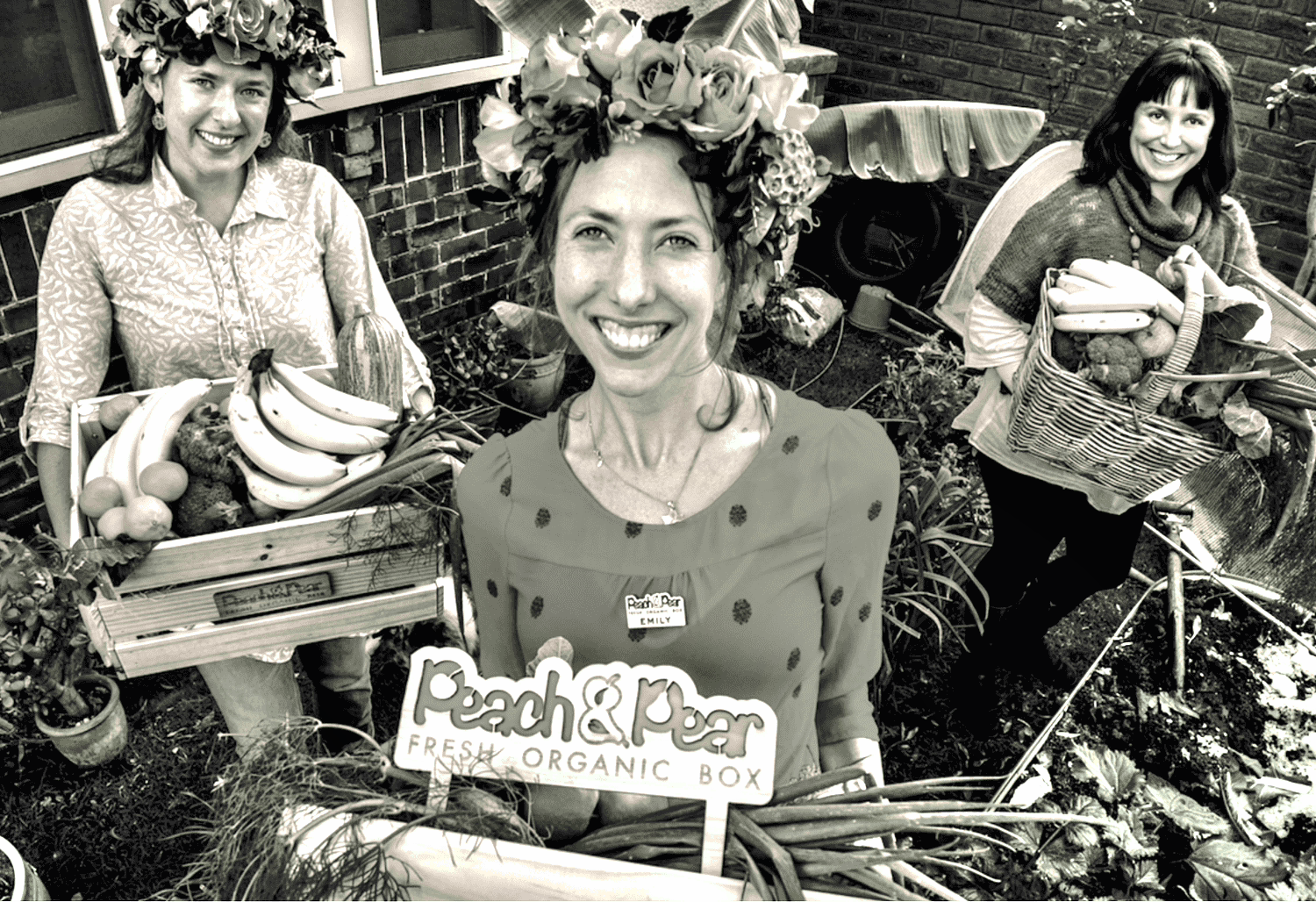
The Peach n Pear Experiment for Food Communities with Emily and her community
Most courses talk about food systems. This one helps you design one.
In the Activating Food Systems course you will develop a practical project to strengthen a local food system in your own region.
Learn to Activate Practical Local Food Systems – Join Living Earth College’s Seed Cohort
A unique seven-week professional programme empowering you to design, grow, and govern resilient food systems from soil to society.
At Living Earth College, we take a holistic approach to food system activation - integrating regenerative farming, community initiatives, infrastructure, and policy design. Whether you’re a grower, community organiser, policymaker, or sustainability professional, our specialised Seed Cohort offers practical skills and systemic methods to transform your local food environment.
Living Earth College emerged from years of grounded collaboration through Magical Farm Tasmania, community food initiatives, and wider partnerships including Local Futures. It was seeded in lived practice: growing food, hosting learning, activating community projects, and working across policy, education, and place based design. From this foundation, the College has evolved as a space for translating real world experience into shared capability. Its work connects small scale farming, community resilience, regenerative thinking, and practical systems change. The courses are designed to help people move from ideas and strategy into action, building the skills, confidence, and relationships needed to activate local food systems in meaningful, place responsive ways.
Why Choose Our Programme?
Comprehensive Curriculum: Cover the Seven Levels of Local Food Systems — from soil health and seed saving to policy frameworks and community food economies.
Expert-Led Learning: Guided by Dr Emily Samuels-Ballantyne, combining academic rigour with hands-on experience.
Place-Based Application: Develop customised projects and strategies tailored to your region’s unique needs.
Limited Cohort Size: Join an exclusive group of 20 professionals for personalised mentoring and collaboration.
Global Relevance: Engage with a network of learners and practitioners advancing food systems worldwide.
This video presents a practical call to strengthen local and regional food systems as a foundation for resilience, public value, and territorial regeneration. It argues that the real challenge is no longer a lack of ideas, but the gap between policy ambition and implementation on the ground. By supporting place-based food economies, collaborative governance, and community-scale activation, institutions can help translate food security, sustainability, and social cohesion goals into lived outcomes.
Who Should Apply?
Farmers and growers interested in regenerative agriculture
Community food organisers and co-op leaders
Local government planners and policy advisors
Sustainability educators and trainers
Social entrepreneurs and food system advocates
Testimonials
“Living Earth College’s course gave me the tools and confidence to launch a successful community food hub in my town.”
“The integration of practical farming with systemic policy design is unique and invaluable.”
Ready to grow local food futures?
Apply now to secure your place in the Seed Cohort — limited spaces available.
Course Program
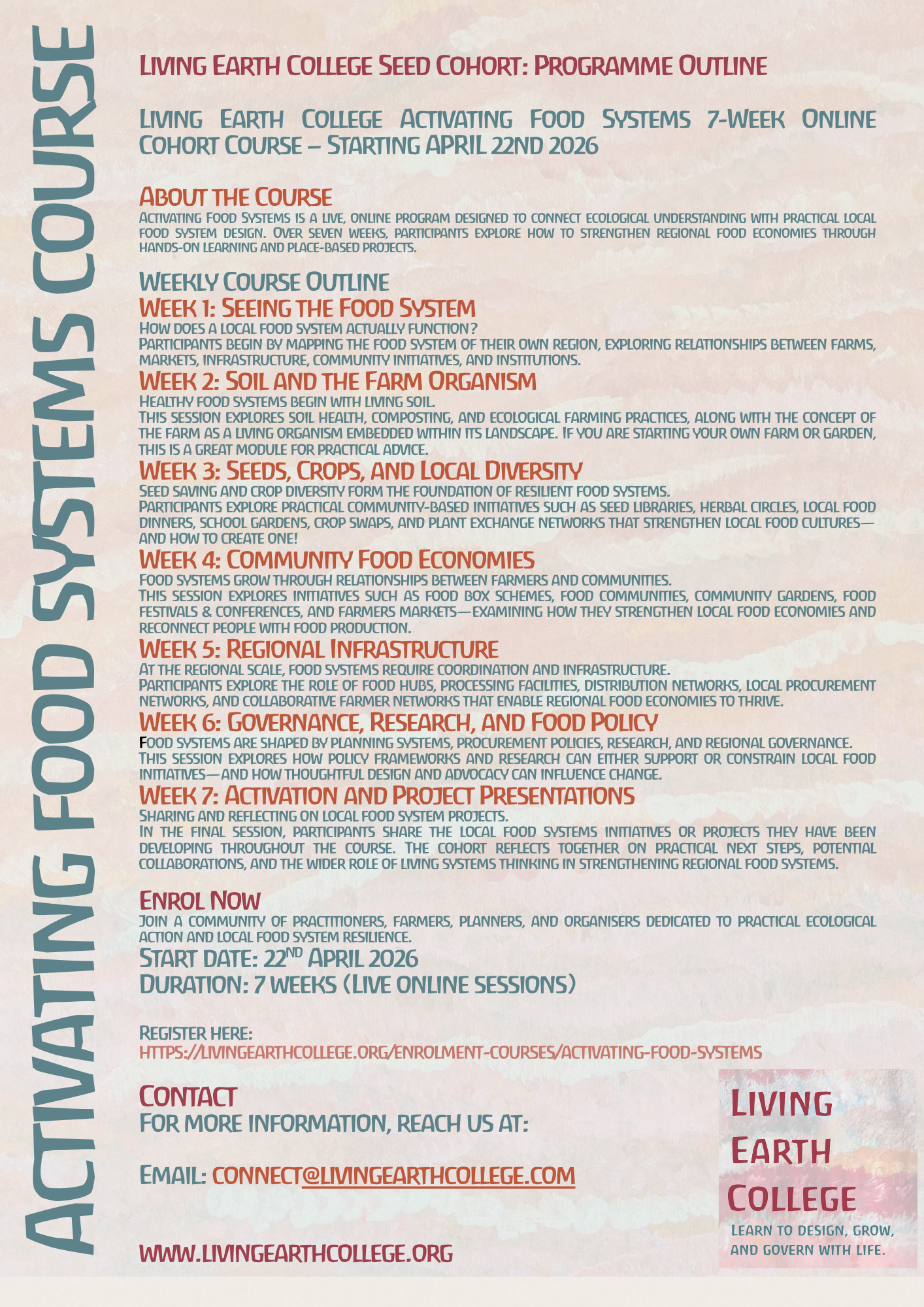
Living Earth College Activating Local Food Systems Course Program
A 7-week professional program for farmers, community organisers, designers, and policymakers.
Beginning Wednesday 22nd April 2026
🌱 Certificate in Local Food Systems Activation
🌱 Live weekly seminars and practical system design
🌱 Limited to 20 participants worldwide
Applications close 16 April or when the cohort reaches capacity.
Tuition
$690 AUD /€420 EUR / CHF 410 / £360 GBP / $450 USD
Early founding rate:
$540 AUD/€330 EUR / CHF 320 / £285 GBP / $350 USD
→ View program details and enroll
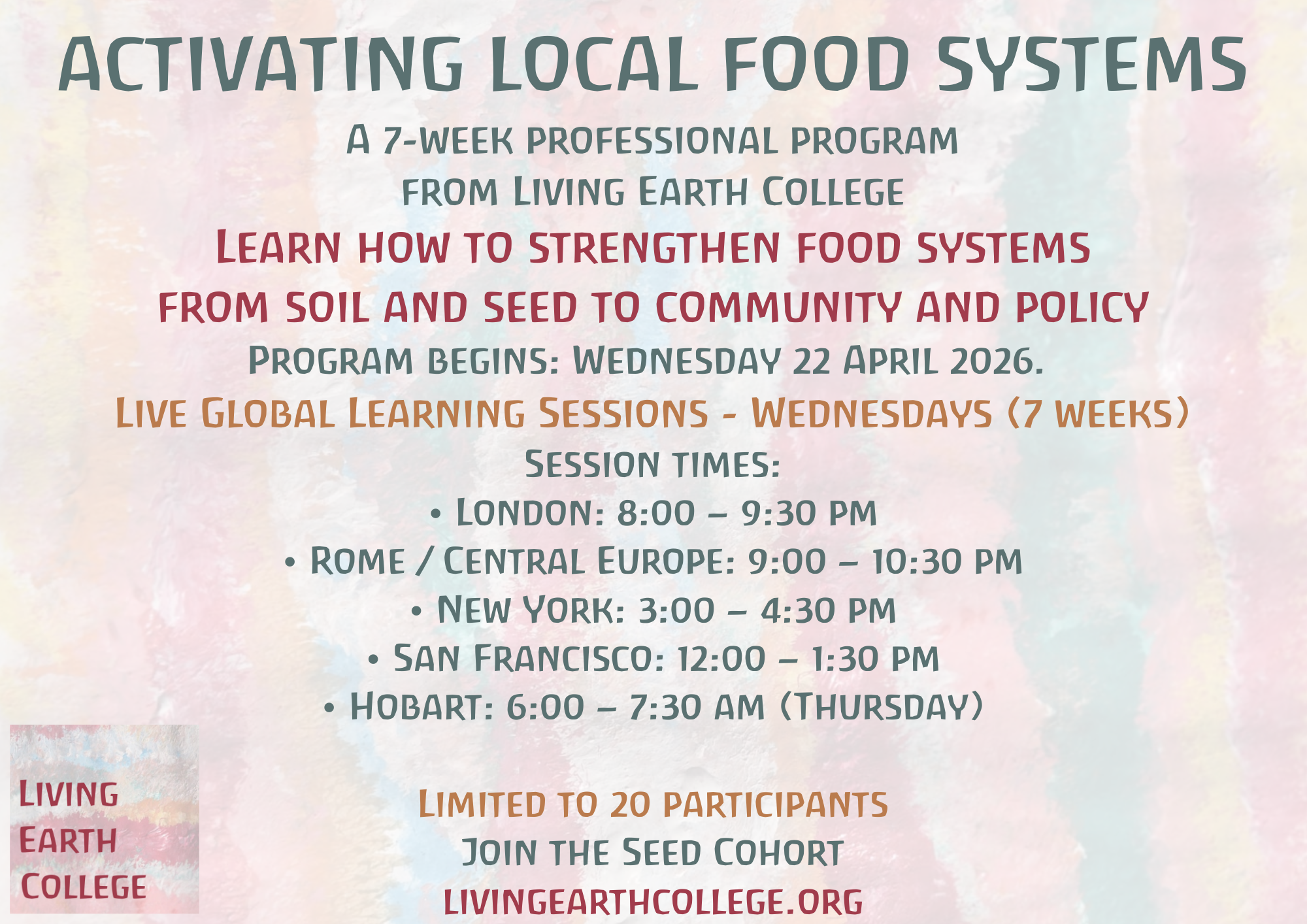

Activating Food Systems Course, Living Earth College. Photography by Ness Vanderburgh
Why this work matters now
Across the world communities are rediscovering the importance of strong local food systems.
Farmers are seeking viable local markets.
Regions are looking for ways to support small producers.
Citizens want greater connection to the land that feeds them.
Yet the knowledge required to organise and activate local food systems is rarely taught in one place.
Agriculture education often focuses on production.
Policy education focuses on institutions.
Community initiatives focus on individual projects.
What is often missing is the ability to see and coordinate the whole system.
Living Earth College was created to address this gap.
The college brings together insights from farming, community food initiatives, infrastructure development, and policy design to support people working to strengthen food systems in their own regions.
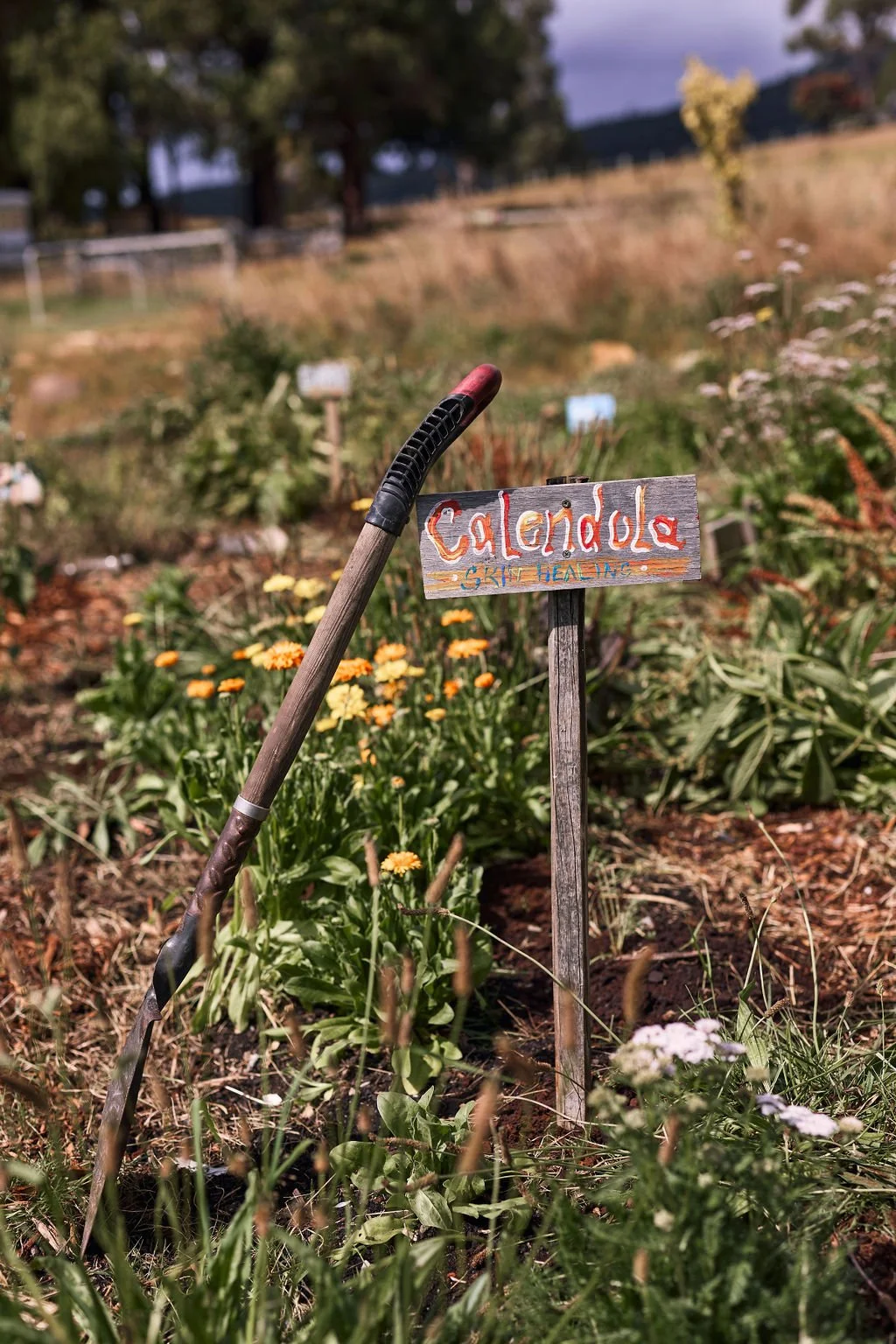
Photography by Ness Vanderburgh
What you will learn
The Activating Local Food Systems program explores food systems as living systems shaped by relationships between land, people, infrastructure, and governance.
Participants learn how to strengthen food systems through:
• soil health and ecological farming
• seed saving and crop exchange networks
• community food economies such as food boxes and markets
• regional food infrastructure including food hubs
• governance and food policy
• systems thinking for long-term resilience
By the end of the program participants develop a place-based strategy for activating a local food system in their region.
→ Explore the full course curriculum
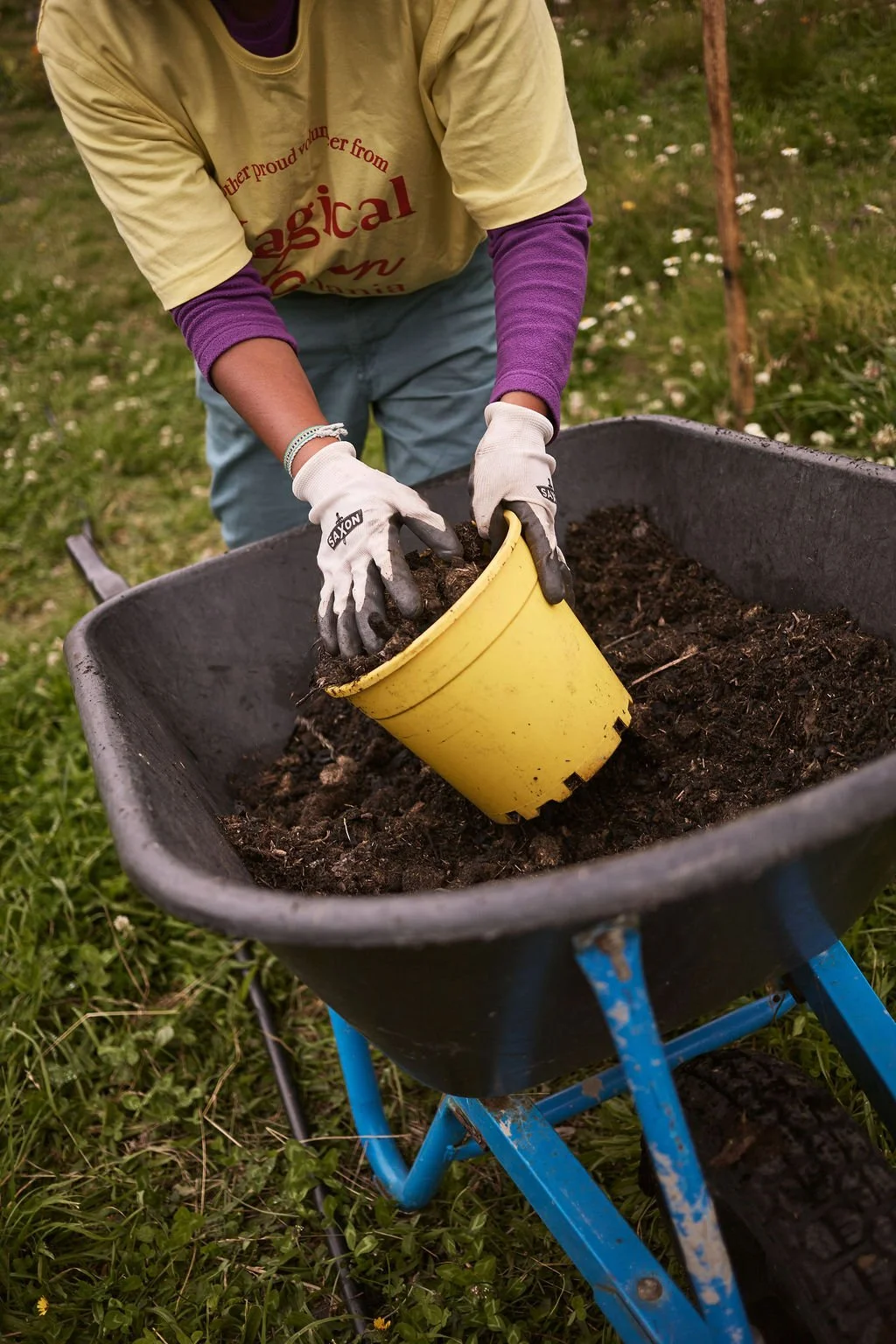
Activating Food Systems Course, Living Earth College. Photography by Ness Vanderburgh
The Seven Levels of Local Food Systems
Healthy food systems grow through multiple interconnected layers.
Living Earth College explores seven levels that shape how food systems evolve.
1. Perception and philosophy
How our understanding of land, economy, and community shapes the way food systems develop.
2. Living rhythms and timing
Observation of seasonal and ecological cycles guiding agricultural life.
3. Soil and farm organism
Healthy soils, composting, biodiversity, and resilient farm systems.
4. Seed and crop infrastructures
Seed libraries, crop swaps, and community seed saving that strengthen crop diversity.
5. Community food economies
Food boxes, markets, and gardens connecting farmers and citizens.
6. Regional food infrastructure
Food hubs, distribution networks, and shared facilities supporting farmers.
7. Policy and bioregional systems
Governance frameworks that shape how food systems develop across landscapes.
Understanding these layers allows communities to move beyond isolated projects toward coordinated food systems.
→ Learn how the seven levels work in practice
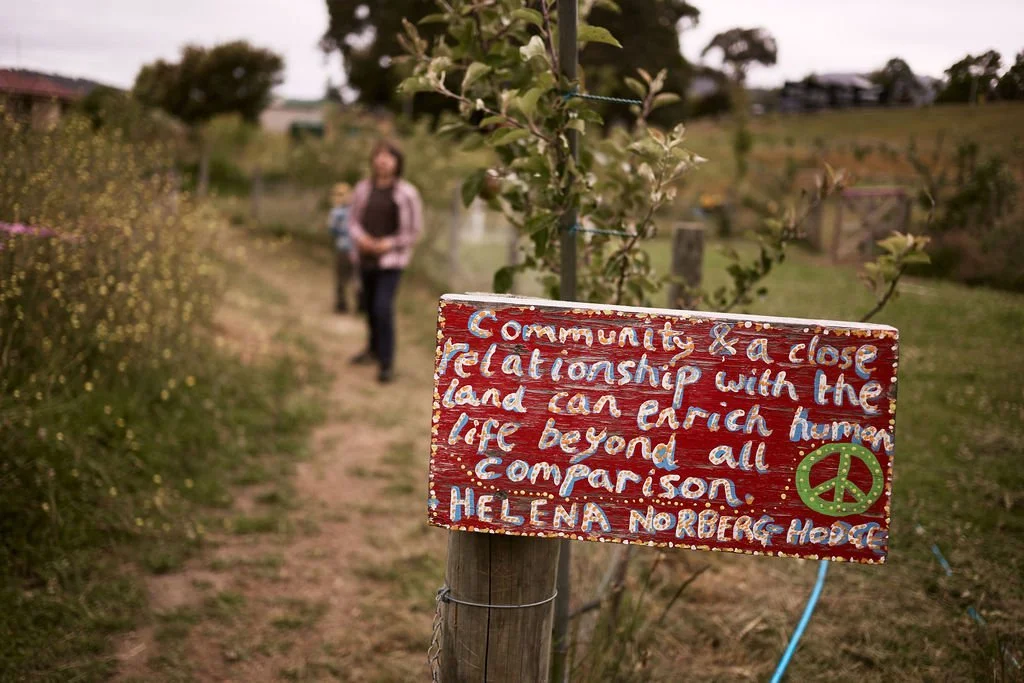
Activating Food Systems Course, Living Earth College. Photography by Ness Vanderburgh
Origins of the College
Living Earth College grew from many years of practical food systems work across Australia.
Projects such as the Docklands Food Garden in Melbourne, Huon Valley Food Hub in Tasmania, Politecnio di Milano COLTIVANDO project, EU policy making programs, the Peach & Pear Food Box, and the Shepparton Food Hub explored how communities can strengthen local food economies through collaboration between farmers, citizens, and institutions.
These initiatives included the creation of seed libraries, crop swaps, food box programs, and regional food infrastructure supporting small farmers.
This body of work later became the focus of doctoral research examining how communities can activate local food systems in practice.
Magical Farm Tasmania emerged as a place where these ideas could be explored through biodynamic agriculture, seed exchange, and community gatherings.
Living Earth College was created to share these learnings with a wider community.
The Seed Cohort
The April 2026 intake forms the founding cohort of Living Earth College.
Participants in this first program become part of the Seed Cohort, helping shape the direction of the college as it grows.
To maintain meaningful dialogue and learning, places are limited to:
20 participants
Join the Cohort here
A personal invitation
Over many years I have worked with farmers, communities, and local governments exploring how stronger local food systems might emerge.
Through initiatives such as the Docklands Food Garden, the Peach & Pear Food Box, and the Shepparton Food Hub, I saw both the potential of community food initiatives and the structural barriers that often prevent them from flourishing.
My doctoral research later reflected on these experiences and asked a simple question:
What conditions allow local food systems to truly thrive?
Living Earth College was created to share these insights and support people working to strengthen food systems in their own regions.
If you feel called to participate in this work, I warmly invite you to join the first cohort.
Dr Emily Samuels-Ballantyne
Founder, Living Earth College
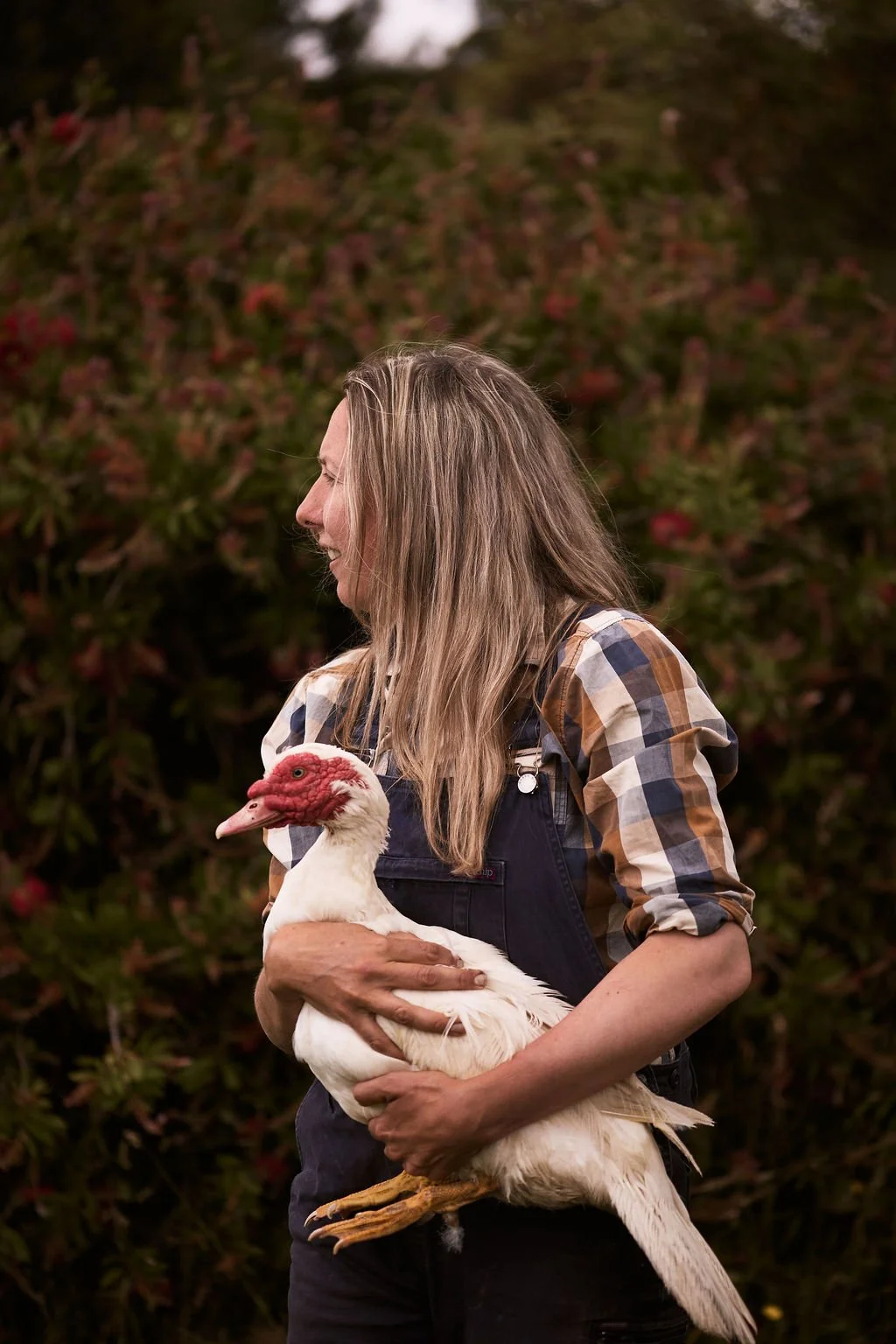
Teacher of the Activating Food Systems Course Dr Emily Samuels-Ballantyne, Living Earth College. Photography by Ness Vanderburgh
Join the Seed Cohort
Program begins: 17 April 2026
Duration: 7 weeks
Format: Live online seminars + systems design exercises
Tuition
$690 AUD
(€420 EUR / CHF 410 / £360 GBP / $450 USD)
Early founding rate:
$540 AUD
(€330 EUR / CHF 320 / £285 GBP / $350 USD)
→ Enroll in the program
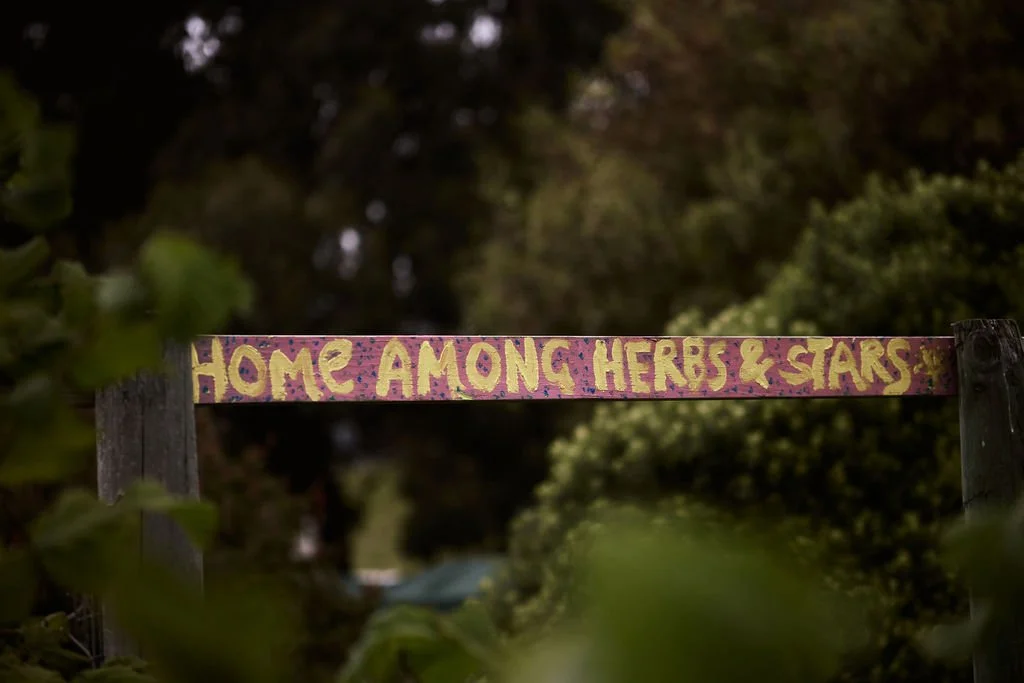
Activating Food Systems Course, Living Earth College. Photography by Ness Vanderburgh
A growing network
Living Earth College connects practitioners working across farming, community initiatives, design, and governance who are committed to strengthening local food systems.
From small farms to regional initiatives, the work of rebuilding food systems is already underway in many places.
Living Earth College exists to support those ready to take part.
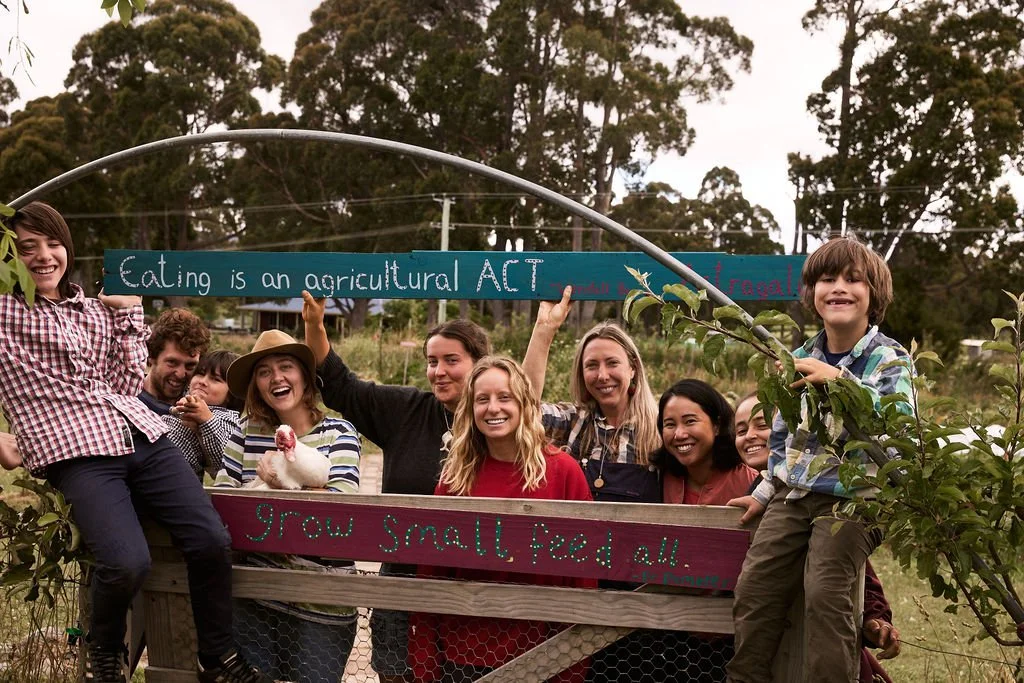
Activating Food Systems Course, Living Earth College. Photography by Ness Vanderburgh